VTL Machine vs Horizontal Lathe: Which One Should You Buy ?
leadermachinetools on 16 February, 2026 | No Comments

Founded in 1971 by the visionary Sh. Darshan Lal Sehdev, Leader Machine Tools has grown from a small casting unit in Batala, Punjab, into one of India’s most respected machine tool manufacturers. With decades of expertise in lathe machines, milling machines, VTLs, and custom workshop solutions, Leader Machine Tools has become a trusted name in precision engineering. If you are looking to invest in a lathe machine for your workshop or factory, understanding the differences between VTL (Vertical Turning Lathe) machines and Horizontal Lathes is essential. This guide will help you make an informed decision.
Basic Difference in Design and Axis

The most fundamental distinction between VTL machines and horizontal lathes lies in their orientation and design:
- Vertical Turning Lathe (VTL):
The workpiece rotates around a vertical axis, while the cutting tool moves horizontally. This design is ideal for heavy, large-diameter workpieces, as gravity naturally stabilizes the material. - Horizontal Lathe:
The workpiece rotates around a horizontal axis, and the cutting tool moves parallel or perpendicular to it. This orientation is suitable for long workpieces and offers easier loading and unloading for smaller to medium-sized components.
In short, VTLs handle tall and heavy workpieces efficiently, while horizontal lathes excel at long, cylindrical parts.
Precision and Stability Comparison
Precision and stability are critical factors for any manufacturing workshop:
- VTL Machines:
- Superior stability for heavy and unbalanced parts due to vertical orientation.
- Reduced spindle deflection ensures higher accuracy on large diameters.
- Ideal for turning operations on large castings, flanges, and discs.
- Horizontal Lathes:
- Excellent precision for long, slender workpieces.
- Suitable for batch production of shafts, rods, and automotive components.
- Horizontal setup may require steady rests for very long components to maintain accuracy.
At Leader Machine Tools, our VTLs and horizontal lathes are engineered with high rigidity beds and precise spindles to ensure long-term accuracy, even under heavy-duty operation.
Material and Workpiece Size Considerations
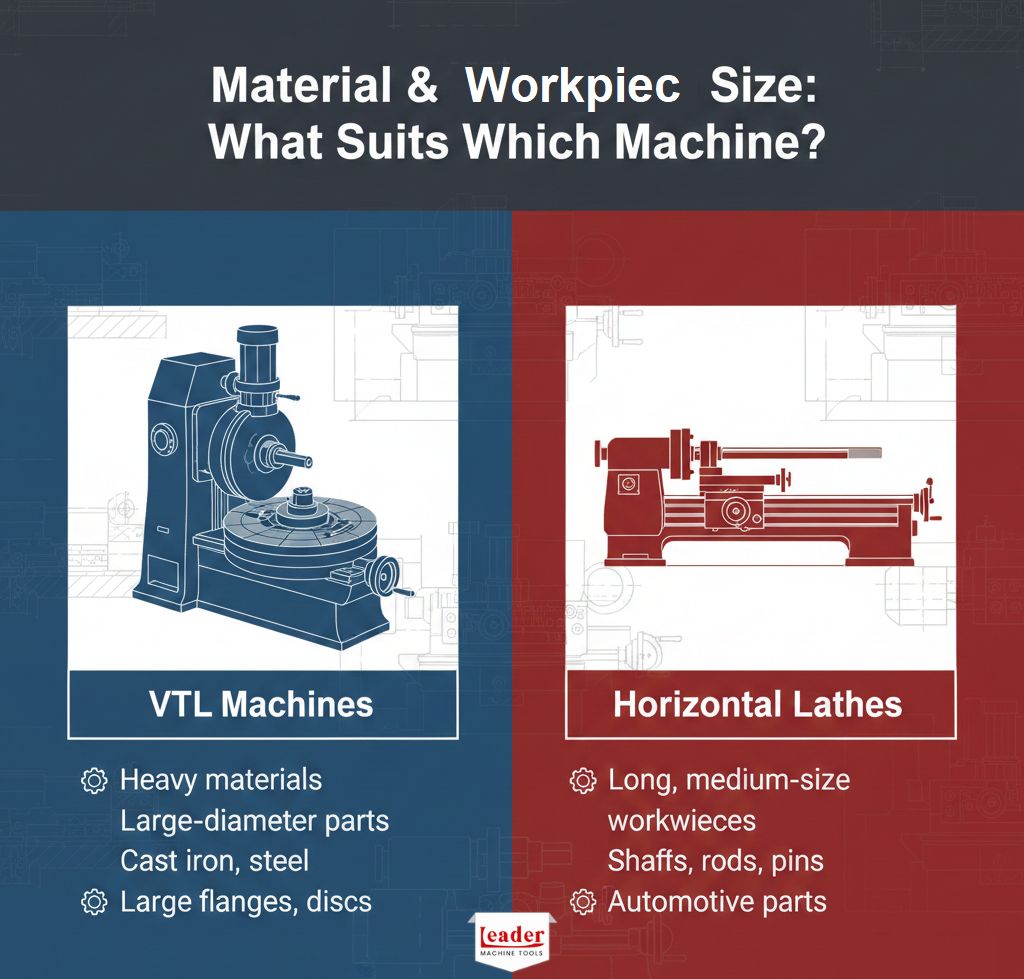
Choosing the right machine also depends on material type and workpiece size:
- VTL Machines:
- Handle heavy steel, cast iron, and alloys effectively.
- Suitable for large-diameter workpieces, such as flywheels, turbine components, and large flanges.
- Horizontal Lathes:
- Best for medium to long workpieces like shafts, pins, and rods.
- Flexible for small to medium batches of steel, brass, or aluminum components.
Leader Machine Tools’ machines are designed to cater to diverse workshop needs, whether for high-volume industrial production or precision custom components.
When to Use VTL Machines
You should consider a VTL machine if your workshop handles:
- Heavy, bulky, or asymmetrical parts.
- Large-diameter turning operations where gravity-assisted stability is advantageous.
- Industries such as steel, power plants, turbines, and heavy engineering.
VTLs provide unmatched rigidity, making them a smart choice for workshops that prioritize stability and precision on large components.
When to Use Horizontal Lathes
A horizontal lathe is ideal when:
- Your workpieces are long and cylindrical.
- You need flexibility for batch production of rods, shafts, or automotive parts.
- Ease of loading and unloading is important for faster operations.
Horizontal lathes from Leader Machine Tools are robust, versatile, and suited for diverse applications, making them a practical choice for small to large manufacturing units.
Cost and Maintenance Differences

Investing in the right lathe also involves considering cost and maintenance:
- VTL Machines:
- Generally higher initial investment due to larger size and heavy-duty construction.
- Maintenance is simpler for heavy workpieces, but floor space requirements are higher.
- Horizontal Lathes:
- Lower upfront cost for small to medium models.
- Routine maintenance is straightforward, but long workpieces may need additional support devices like steady rests.
Leader Machine Tools offers efficient, durable, and low-maintenance lathes that provide excellent ROI for Indian workshops.
Decision Guide by Application
Here’s a quick guide to help you choose:
| Feature / Requirement | VTL Machine | Horizontal Lathe |
|---|---|---|
| Orientation | Vertical | Horizontal |
| Best For | Heavy, large-diameter parts | Long, slender workpieces |
| Industries | Power, heavy engineering | Automotive, general manufacturing |
| Stability & Precision | Excellent for large workpieces | Excellent for long shafts |
| Cost | Higher initial investment | Moderate to low |
| Floor Space | Larger | Moderate |
Leader Machine Tools Tip: Evaluate the size, weight, and shape of your workpieces first. Then consider production volume, precision requirements, and available floor space before making your choice.
CTA:
Ready to choose the right lathe for your workshop? Compare our VTL Machines with Horizontal Lathes today and find the perfect fit for your production needs.