Plate Rolling Machine: Working Principle and Types
leadermachinetools on 17 February, 2026 | No Comments
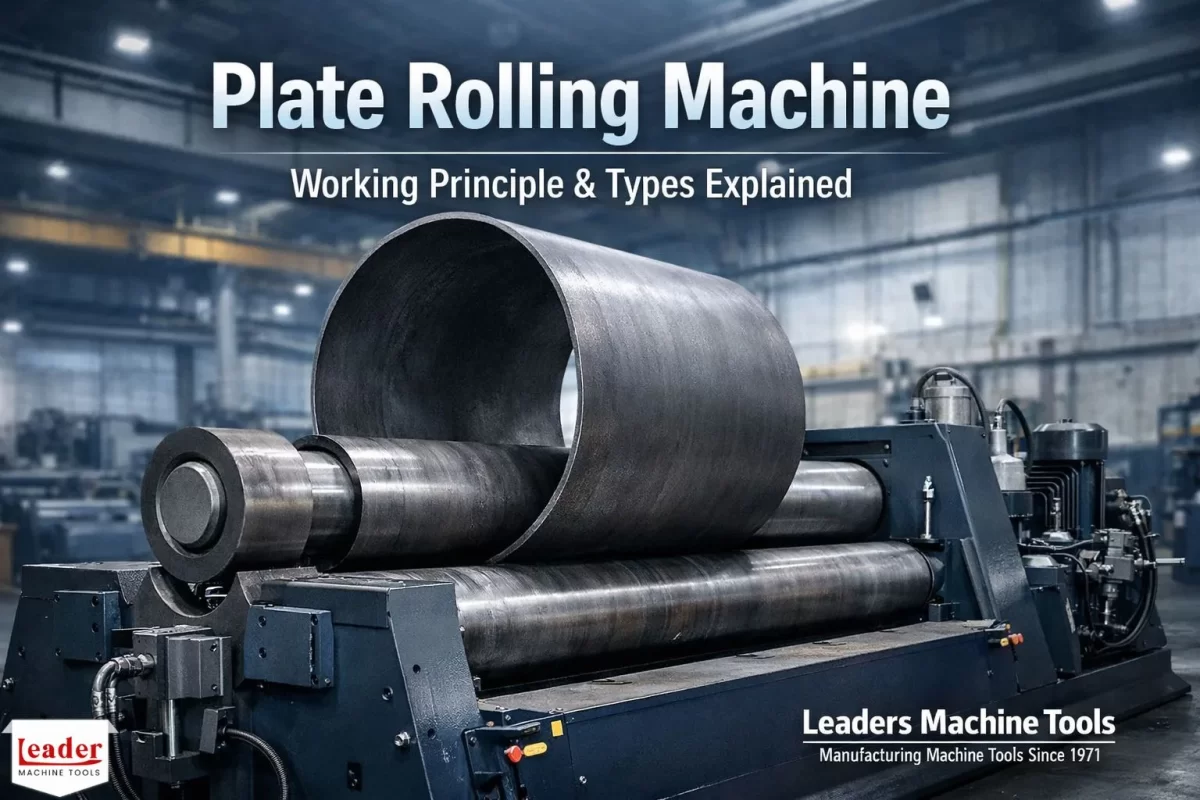
Plate rolling machines play a key role in metal fabrication industries where flat steel plates need to be formed into cylinders, cones, and curved sections. From storage tanks and pressure vessels to structural components, plate rolling ensures accurate shaping without material damage.
At Leaders Machine Tools, with over five decades of experience in manufacturing heavy-duty machine tools in India, we design plate rolling machines that deliver consistent bending accuracy, strong build quality, and long service life for Indian workshop conditions.
This article explains the working principle, machine types, applications, and buying factors in a simple and practical way.
What Is a Plate Rolling Machine
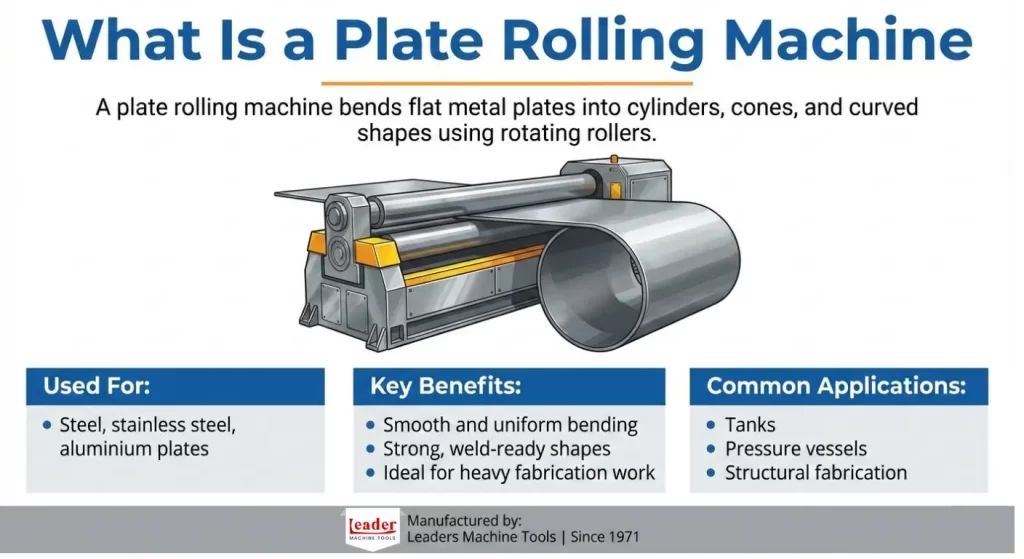
A plate rolling machine is a metal forming machine used to bend flat metal plates into round or curved shapes by passing them between rotating rollers.
Instead of cutting or welding multiple sections, plate rolling allows fabricators to:
- Form uniform cylinders
- Create conical shells
- Produce smooth curved profiles
These machines are widely used for rolling mild steel, stainless steel, alloy steel, and aluminium plates in different thickness ranges.
Unlike press brakes, plate rolling machines apply continuous rolling pressure, which helps maintain material strength and surface finish.
2-Roll, 3-Roll, and 4-Roll Types
Different plate rolling machines are designed to suit different production needs. The choice depends on plate thickness, job complexity, and volume of work.
2-Roll Plate Rolling Machine
- Consists of one fixed roll and one moving roll
- Mainly used for thin plates and light-duty jobs
- Simple construction and lower cost
- Limited flexibility for complex shapes
Best suited for:
Small workshops with basic rolling requirements
3-Roll Plate Rolling Machine
- Available in pyramid type and variable geometry type
- Three rollers apply bending force progressively
- Can roll cylinders and partial cones
- Commonly used across Indian fabrication units
Advantages:
- Good balance between cost and performance
- Suitable for medium plate thickness
- Easy to operate and maintain
This is one of the most widely used plate rolling machines in India.
4-Roll Plate Rolling Machine
- Includes two central rolls and two side rolls
- Allows pre-bending on both edges
- Delivers higher accuracy and repeatability
- Ideal for heavy-duty and high-production environments
Benefits:
- Faster job setup
- Minimal material wastage
- Excellent for thick and high-strength plates
Best suited for:
Pressure vessel manufacturers, EPC contractors, and large fabrication plants
Step-by-Step Working Process
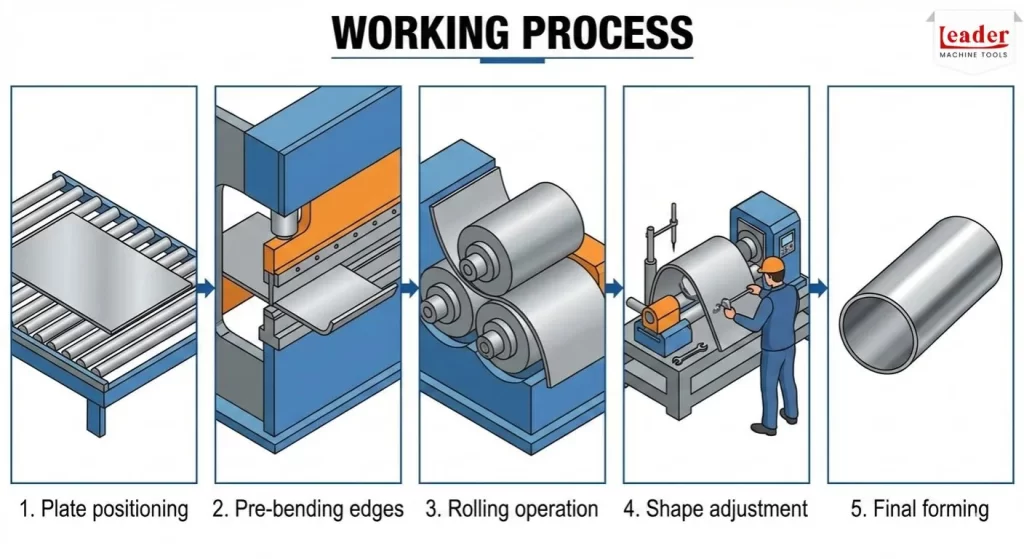
Understanding the working process helps operators achieve better accuracy and avoid plate damage.
Step 1: Plate Positioning
The metal plate is placed between the rollers. Alignment is critical to avoid tapering or uneven bending.
Step 2: Initial Pre-Bending
Side rolls apply pressure to bend the plate edges. This step reduces flat ends and improves final shape accuracy.
Step 3: Rolling Operation
The rollers rotate, pulling the plate forward while gradually increasing pressure. The plate begins to form a curved profile.
Step 4: Shape Adjustment
Roller positions are adjusted based on:
- Plate thickness
- Material grade
- Required diameter or cone angle
Step 5: Final Forming
The plate is rolled until the desired cylinder or cone shape is achieved, maintaining uniform curvature throughout.
At Leaders Machine Tools, our plate rolling machines are engineered with precise roller alignment and robust frames to ensure smooth rolling even for heavy plates.
Applications in Fabrication and Metal Forming
Plate rolling machines are essential in industries where curved metal components are required.
Common Applications
- Storage tanks and silos
- Pressure vessels and boilers
- Heat exchangers
- Chimneys and ducts
- Windmill towers
- Structural fabrication
Industries Served
- Oil & gas
- Power plants
- Cement plants
- Chemical and fertilizer units
- Infrastructure and EPC projects
Reliable plate rolling reduces welding joints, improves strength, and ensures dimensional accuracy.
Factors to Consider Before Buying
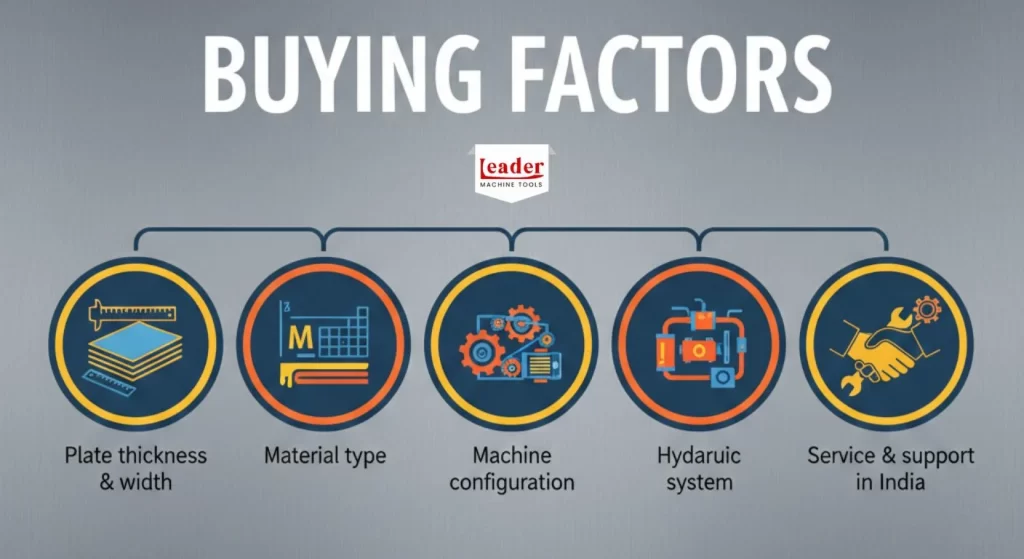
Selecting the right plate rolling machine is important for long-term productivity and safety.
Plate Thickness and Width
Always choose a machine with extra capacity beyond your regular job size to avoid overloading.
Material Type
Rolling stainless steel or alloy steel requires higher torque and stronger rollers.
Machine Type
- Light work → 2-roll
- General fabrication → 3-roll
- Heavy and precision work → 4-roll
Drive System
Hydraulic plate rolling machines provide:
- Better control
- Smooth bending
- Consistent pressure
Build Quality and Service Support
A machine is only as good as its:
- Frame rigidity
- Roller material
- Availability of spares and service
With manufacturing based in Batala, Punjab, Leaders Machine Tools offers reliable after-sales support across India, ensuring long machine life and minimal downtime.
Conclusion
A plate rolling machine is a vital investment for any metal fabrication unit. Understanding its working principle and machine types helps businesses choose equipment that delivers accuracy, efficiency, and durability.
With decades of manufacturing experience, Leaders Machine Tools continues to support Indian fabricators with robust, performance-driven plate rolling machines designed for real workshop conditions.