Plano Milling vs CNC Milling: Which Delivers Better Efficiency
leadermachinetools on 17 February, 2026 | No Comments
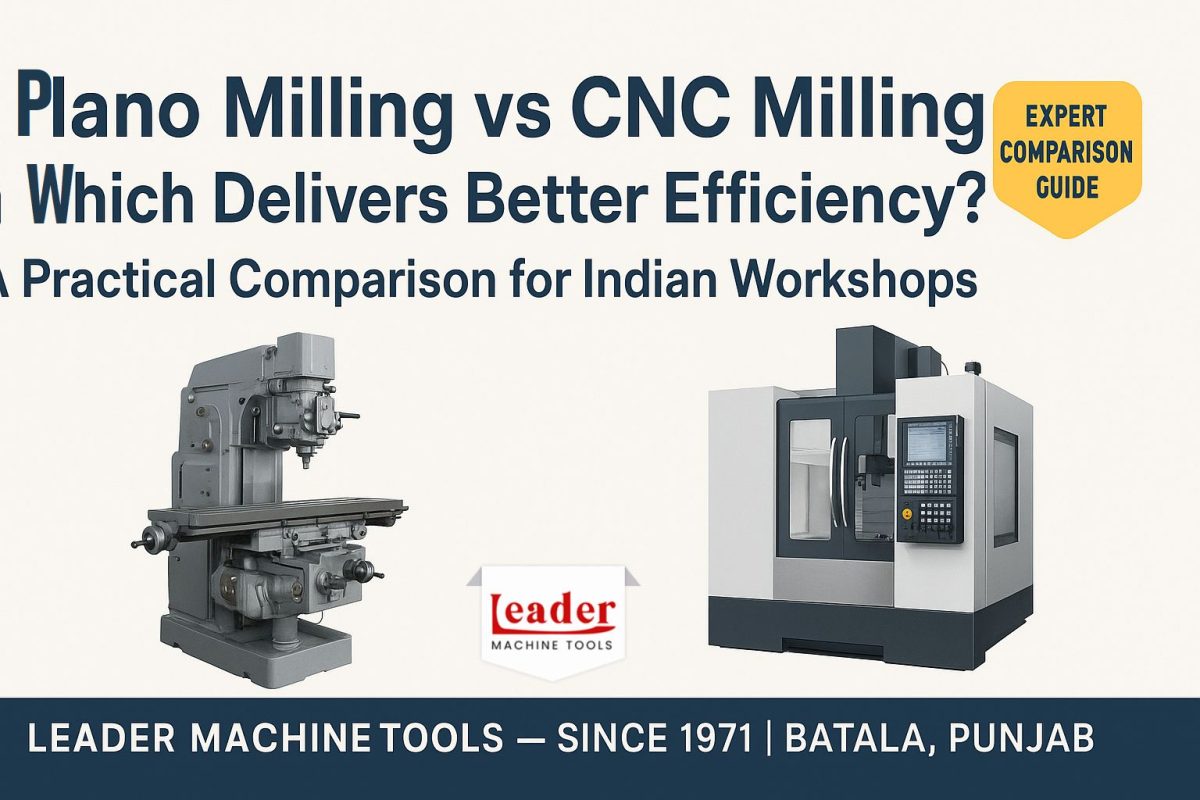
Founded in 1971 by the visionary Sh. Darshan Lal Sehdev, Leader Machine Tools (Batala, Punjab) has built a legacy of precision, trust, and engineering excellence. What began as a simple gunmetal casting unit has grown into one of India’s most respected machine tool manufacturers, supplying lathe machines, milling machines, plano millers, VTLs, and custom workshop solutions across the country.
The company’s commitment to quality and Indian manufacturing was recognized in 1980 when Sh. Darshan Lal Sehdev received the prestigious Udyog Patra Award, presented by then Vice President of India, Sh. M. Hidayatullah, at FICCI Auditorium, New Delhi.
With more than five decades of engineering experience, Leader Machine Tools is well-positioned to guide customers on choosing the right milling technology for their production needs.
One of the most common questions buyers ask is:
“Plano Milling or CNC Milling — which gives better efficiency?”
Let’s break it down in simple and practical language.
Overview of Both Methods
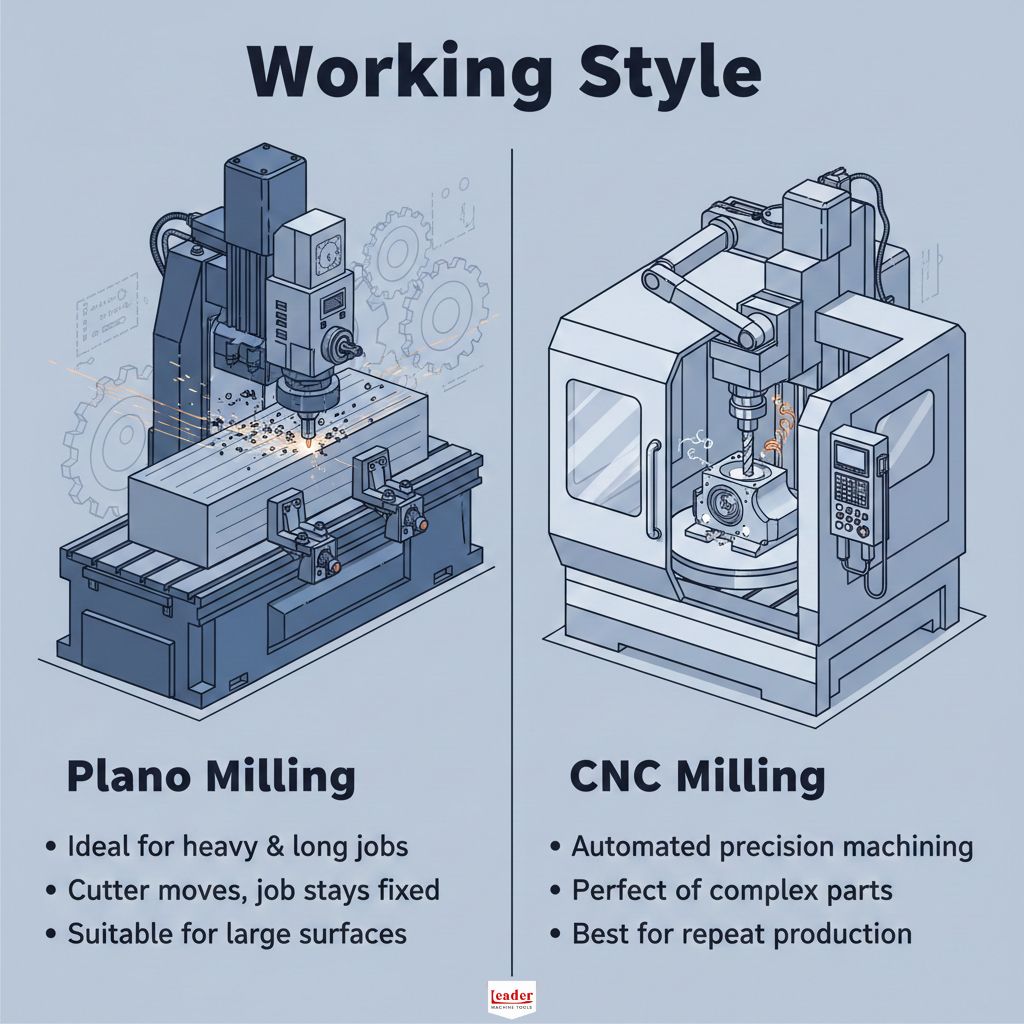
What is Plano Milling?
Plano milling is a machining method where a large workpiece remains stationary, and the cutting head moves across it.
It is best suited for:
- Heavy, long, or wide components
- Roughing heavy material
- Base plates, machine beds, structural components
- Jobs requiring longer travel and deep cutting
Plano millers are known for their raw power, rigidity, and ability to handle oversized jobs that CNC machines often cannot accommodate.
What is CNC Milling?
CNC (Computer Numerical Control) milling uses automated controls for precise, repeatable, and high-accuracy machining.
The technology is ideal for:
- Medium-size components
- High-precision machining
- Repetitive batch production
- Intricate profiles and contours
- Tool room applications
CNC milling machines excel in precision, automation, and speed — especially when consistency is important.
Accuracy and Speed Comparison
Accuracy Difference
CNC Milling
- Offers much higher precision
- Accuracy ranges in microns (depending on model)
- Ideal for complex shapes, contours, and tolerances
- Minimal operator dependency
Plano Milling
- Good accuracy for heavy jobs
- Better suited for leveling, surfacing, and heavy roughing
- More reliant on operator skill
- Not ideal for very tight tolerances or intricate designs
Winner for Accuracy: CNC Milling
Speed Difference
Plano Milling
- Faster for heavy stock removal
- Can machine larger surfaces in fewer passes
- Designed for big cuts and long jobs
CNC Milling
- Faster for precision machining
- Quick tool changes
- High feed rates and spindle speeds
- Extremely efficient for batch production
Winner for Speed:
- Plano Milling for heavy roughing
- CNC Milling for precision and batch work
Learn about our CNC Milling & Plano Milling Machines
Setup Time and Automation
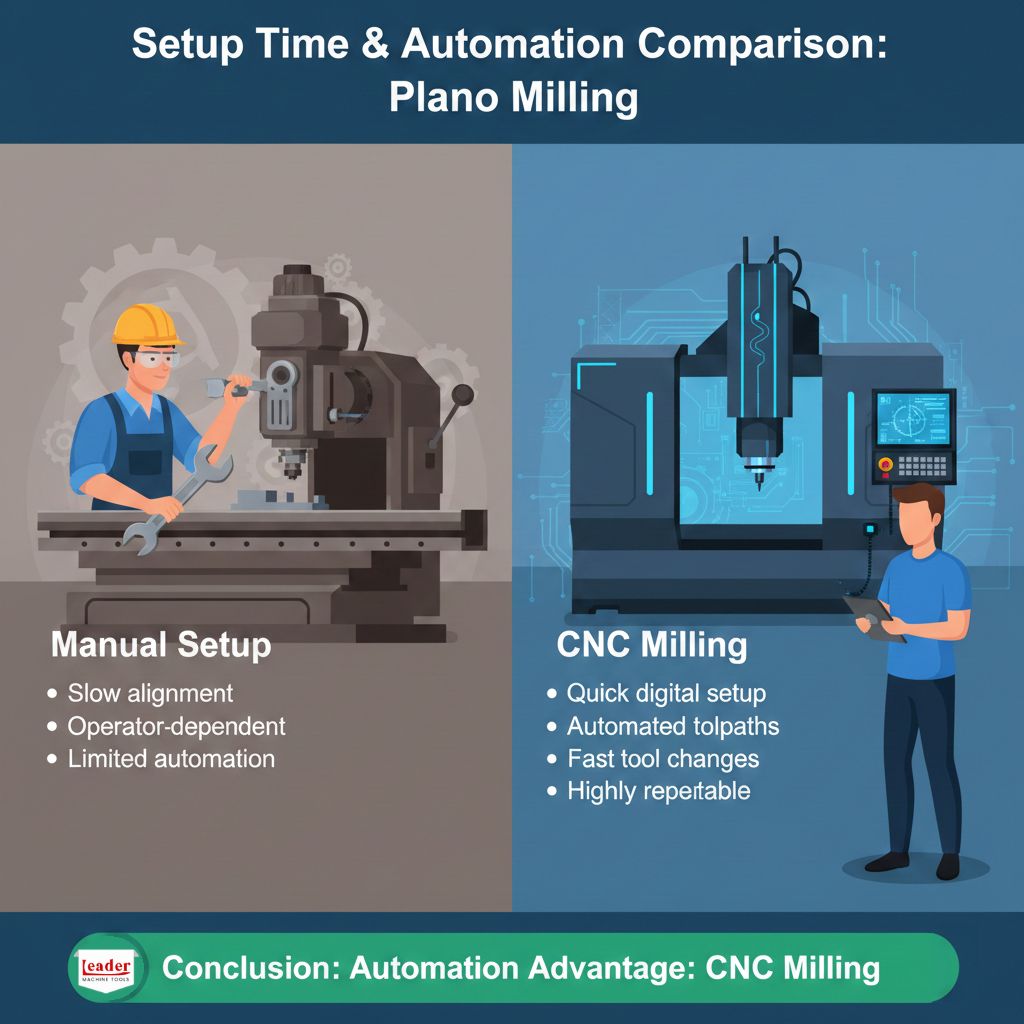
Setup in Plano Milling
- Manual setup
- Takes more time for alignment
- Dependent on operator expertise
- Best for customized or one-off heavy jobs
Setup in CNC Milling
- Minimal manual intervention
- Pre-programmed toolpaths
- Faster changeovers
- Highly suitable for repeat production
Automation Comparison
- Plano Miller: Limited automation
- CNC Milling: High automation, consistent output, lower human error
Winner: CNC Milling
If your factory wants faster cycles with fewer errors, CNC is more efficient.
Cost vs Output Ratio
Initial Machine Cost
- Plano Milling Machines: Lower initial investment
- CNC Milling Machines: Higher investment due to electronics & automation
Running Cost
- Plano: Low maintenance, higher manpower
- CNC: Lower manpower, but electronic components need periodic checks
Output Efficiency
- Plano: Best for heavy, oversized, non-repetitive jobs
- CNC: Best for fast, accurate, repetitive production
Cost Efficiency Logic
If you process heavy components occasionally → Plano Milling wins
If you produce parts daily with consistent accuracy → CNC Milling wins
Best Fit by Industry Use
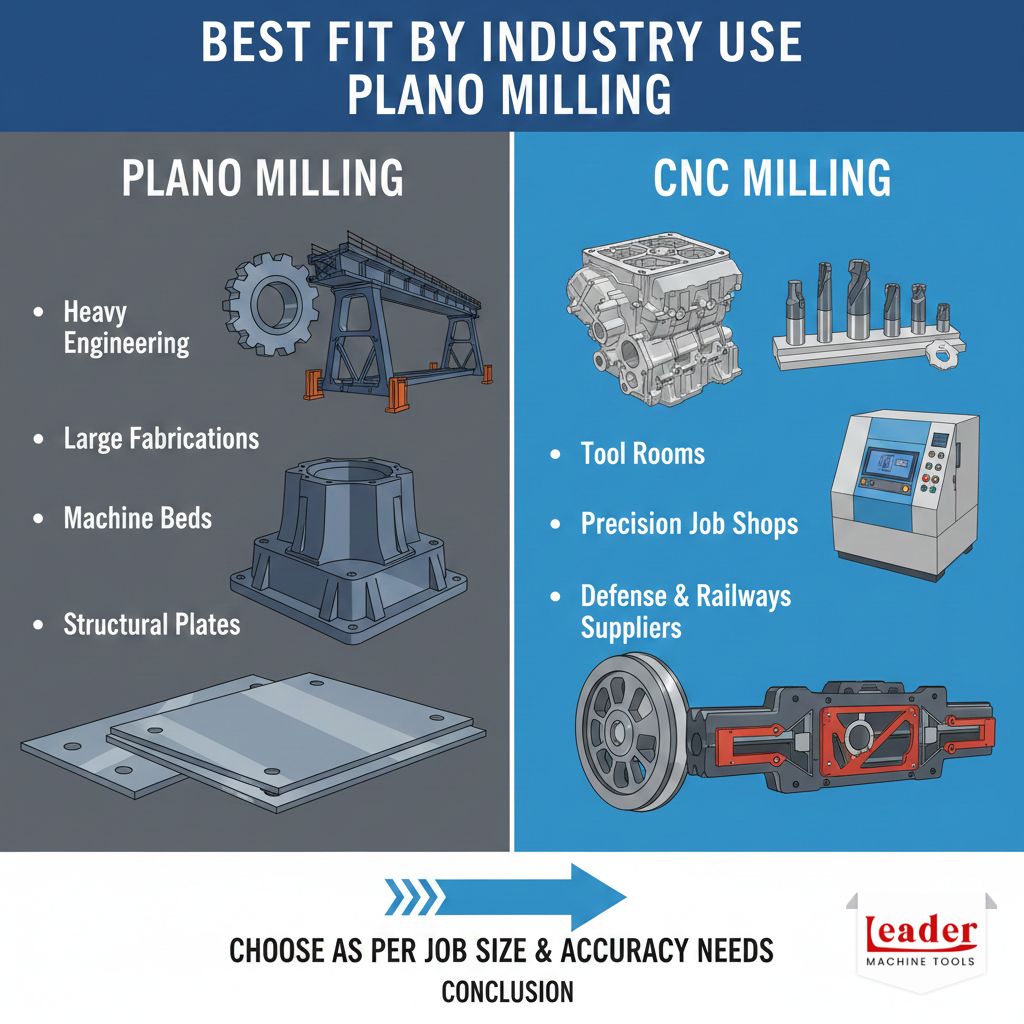
Where Plano Milling Performs Best
Steel fabrication units
Heavy engineering
Machine bed manufacturers
Structural and plate machining
Large-scale industrial workshops
If your job size is very large or material removal is heavy, a plano miller provides better efficiency and value.
Where CNC Milling Performs Best
Automotive industry
Tool rooms
Defence & Railways suppliers
Batch production units
Precision components manufacturing
Engineering job shops
If your priority is accuracy, repeatability, and automation, CNC milling delivers far higher efficiency.
Final Verdict: Which One Is More Efficient?
There is no universal winner — efficiency depends on your workload.
| Type of Work | Best Machine | Why |
|---|---|---|
| Heavy, long, large components | Plano Milling | High rigidity, big surface machining |
| Precision and accuracy work | CNC Milling | Computer-controlled accuracy |
| Batch production | CNC Milling | Repetition, speed, automation |
| Deep metal removal | Plano Milling | More power, heavier cuts |
| Complex shapes | CNC Milling | Toolpath flexibility |
For most modern workshops, the ideal setup is to have both — Plano for roughing and heavy jobs, CNC for finishing and precision stages.
Why Choose Leader Machine Tools?
- 50+ years of manufacturing experience
- Strong legacy of quality since 1971
- In-house casting and machining
- Heavy-duty, long-life machines
- PAN India installation and service support
- Custom sizes and configurations available
- Trusted by engineering industries across India
When you invest in a machine from Leader Machine Tools, you’re choosing durability, accuracy, and Indian engineering excellence.