Lathe Machine Utilization Tracking Without Expensive Software
leadermachinetools on 17 February, 2026 | No Comments

In many Indian workshops, lathe machines are running every day—but owners still don’t know how effectively they are being used.
The machine is powered ON, operators are present, yet productivity remains uncertain.
Most shop owners believe that proper utilization tracking needs expensive software, sensors, or ERP systems. In reality, this is not true—especially for manual lathes, tool rooms, and MSME workshops.
At Leaders Machine Tools, working closely with Indian workshops for over five decades, we have seen that simple tracking systems, when used consistently, deliver real improvements in output, planning, and profitability.
This article explains practical, low-cost methods to track lathe machine utilization—without buying expensive software.
Why Lathe Machine Utilization Matters

Lathe utilization is not about complex reports. It answers basic but important questions:
- How many hours is the lathe actually cutting metal?
- How much time is lost in setup, waiting, or idle conditions?
- Are machines overloaded or underused?
- Is productivity loss due to machine issues or process gaps?
Without this clarity, decisions are made on guesswork—leading to:
- Unnecessary overtime
- Delayed deliveries
- Low operator accountability
- Wrong capacity expansion decisions
Utilization tracking gives control, not paperwork.
Understanding Utilization in Simple Terms
For a manual lathe, utilization can be divided into four basic time blocks:
- Productive Cutting Time – Machine is machining
- Setup & Adjustment Time – Tool change, job setting, alignment
- Idle Time – Operator waiting, material delay, inspection
- Breakdown / Maintenance Time
You don’t need software to record this—just discipline.
Method 1: Daily Lathe Utilization Log Sheet
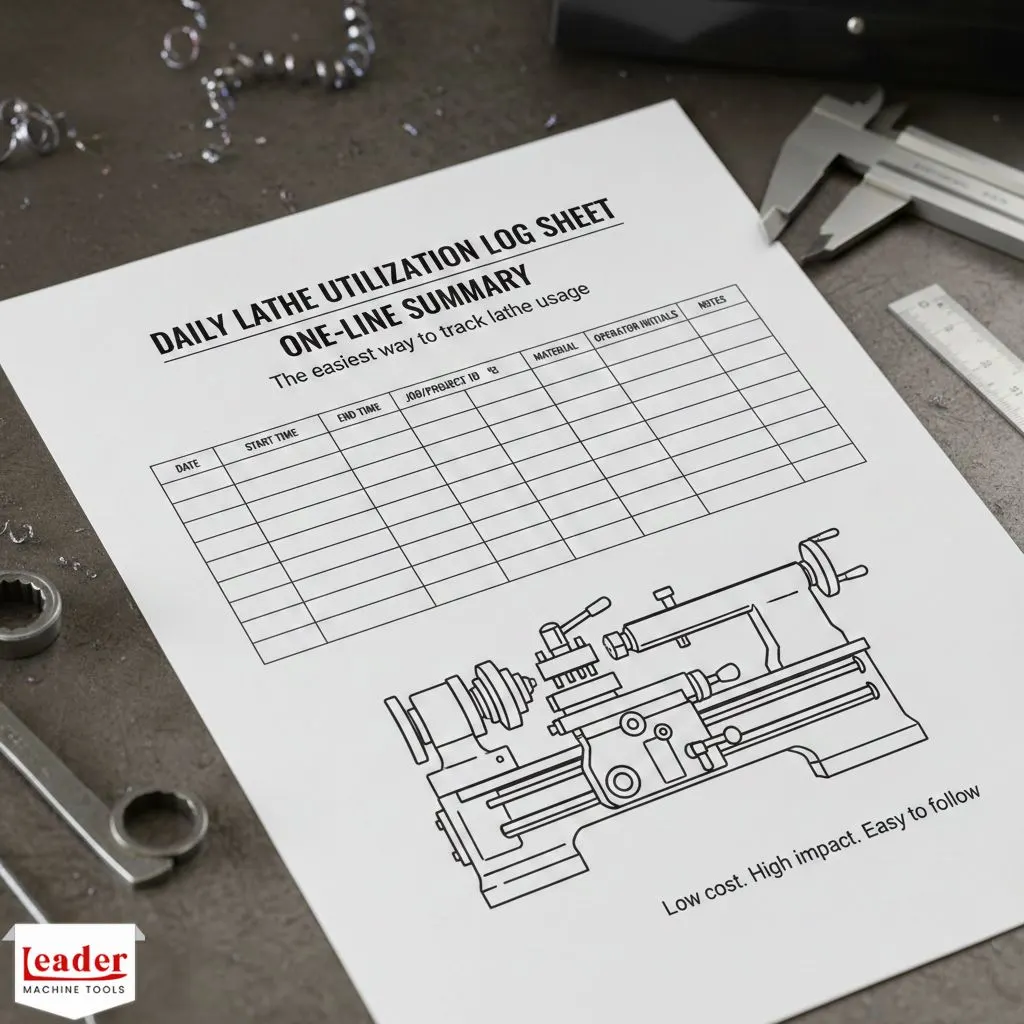
This is the most effective and affordable method for Indian workshops.
How it Works:
A simple paper or Excel sheet placed near each lathe.
What to Record:
- Shift start & end time
- Job number or component name
- Cutting time (approximate)
- Setup time
- Idle reason (material, tool, inspection, power)
Why It Works:
- Operators understand it easily
- Supervisors can review daily
- Patterns become visible within 1–2 weeks
Many Leaders Machine Tools customers start with this method and continue using it even after years—because it works.
Method 2: Shift-Based Whiteboard Tracking
Ideal for small workshops with 2–10 lathes.
How it Works:
A whiteboard placed in the shop floor showing:
- Machine number
- Current job
- Status: Running / Setup / Idle
- Reason for idle (short note)
Benefits:
- Real-time visibility
- No paperwork
- Encourages operator responsibility
This method improves shop-floor discipline and reduces avoidable idle time without any digital investment.
Method 3: Basic Excel Utilization Tracker
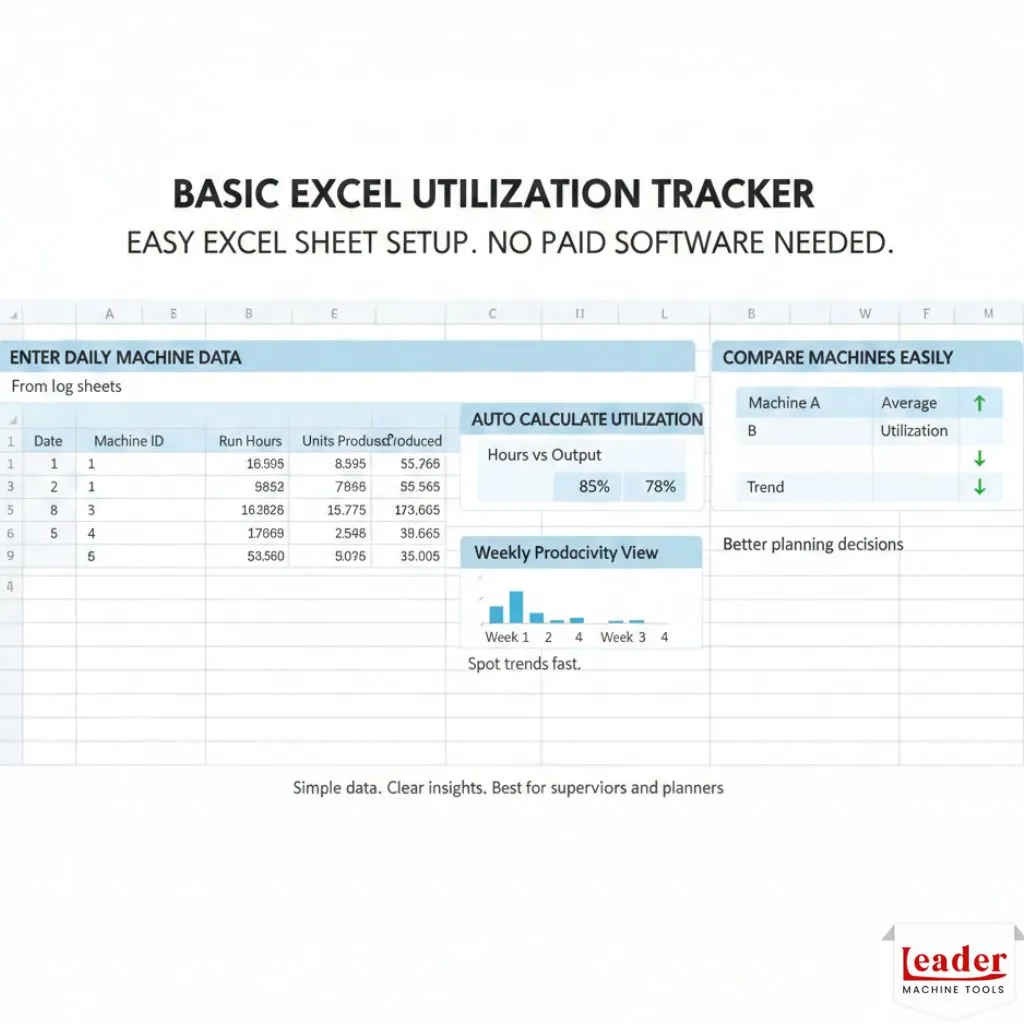
For workshops with a supervisor or office assistant.
Simple Setup:
- One Excel sheet per machine
- Daily data entry from log sheets
- Weekly summary of:
- Total available hours
- Cutting hours
- Idle hours
What You Gain:
- Weekly utilization percentage
- Comparison between machines
- Data-backed planning
No paid software. No licenses. Just structured thinking.
Method 4: Operator Self-Reporting (Trust-Based System)
This method works well in experienced tool rooms.
How it Works:
Operators note:
- Start of job
- End of job
- Reason for delays
Important Point:
This system works only when:
- Targets are realistic
- Data is used for improvement, not punishment
At Leaders Machine Tools, we always advise using utilization data as a process improvement tool, not a pressure tool.
Common Mistakes to Avoid
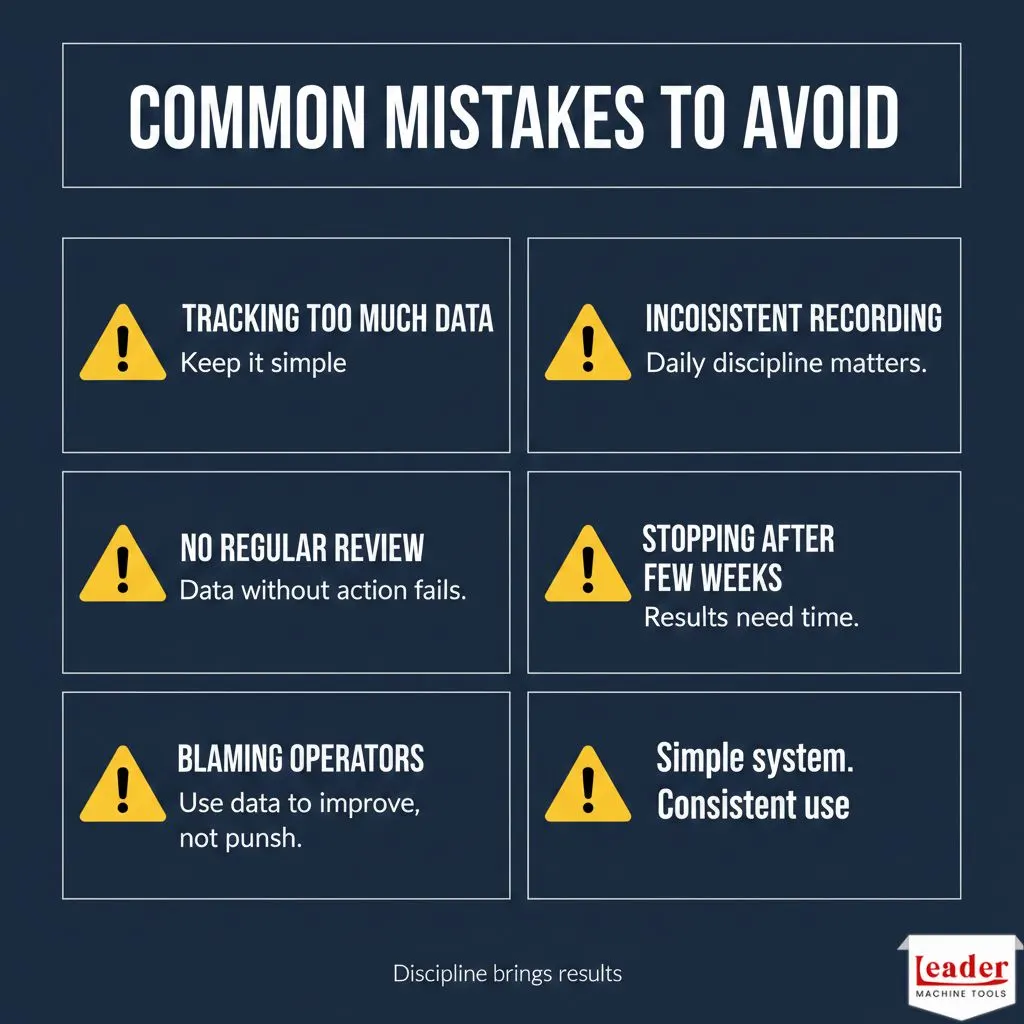
Many workshops fail not because the method is wrong, but because of these mistakes:
- Tracking too many parameters
- Expecting exact minutes instead of approximate trends
- Not reviewing data regularly
- Using data only to blame operators
- Stopping the system after 2–3 weeks
Consistency matters more than accuracy.
How Utilization Tracking Improves Productivity
Workshops that follow simple tracking regularly see:
- 10–20% improvement in effective machine usage
- Better job planning and delivery timelines
- Reduced unnecessary overtime
- Clear justification for buying new machines
Several customers of Leaders Machine Tools, especially manual lathe users, improved output without adding a single new machine—just by understanding where time was going.
Role of Machine Design in Utilization
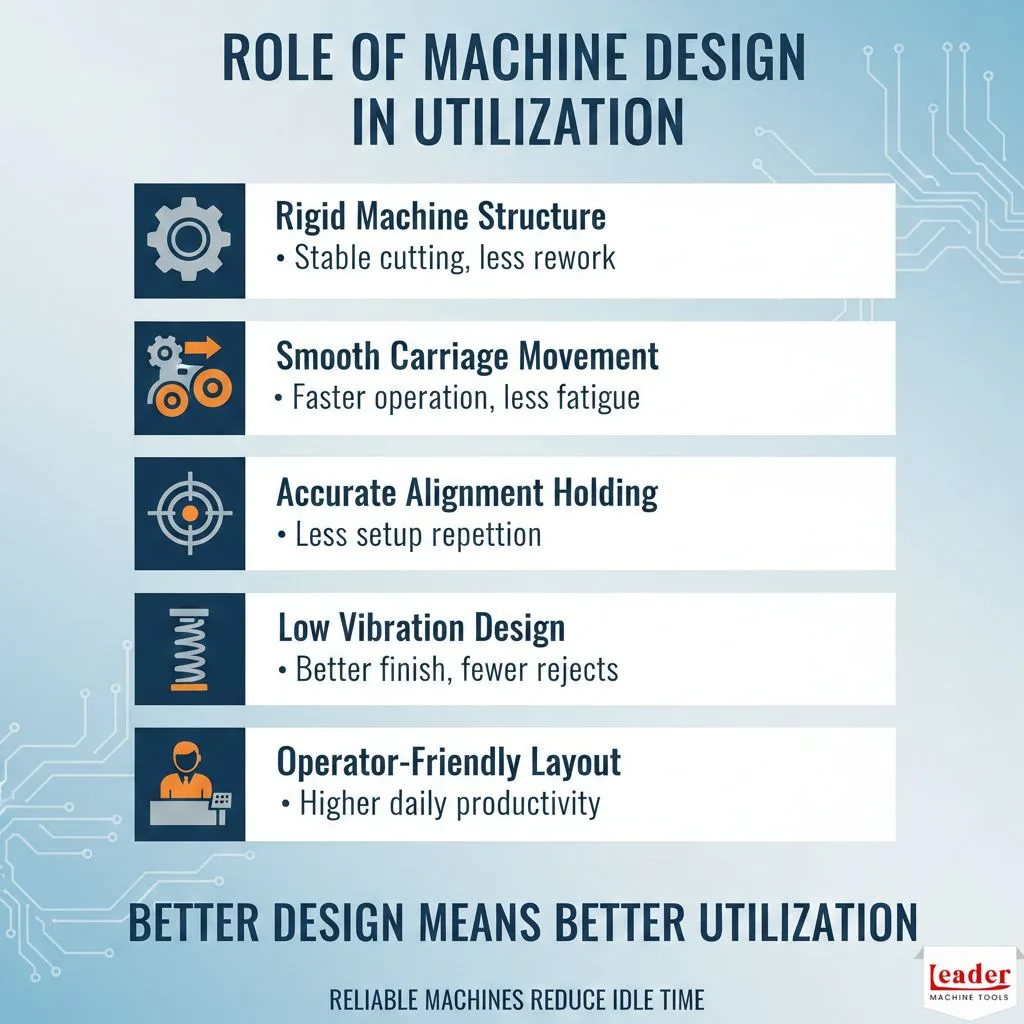
Tracking also highlights machine-related delays, such as:
- Frequent alignment loss
- Slow carriage movement
- Poor ergonomics
- Excessive vibration affecting accuracy
That’s why machine quality matters.
Since 1971, Leaders Machine Tools—founded by Sh. Darshan Lal Sehdev in Batala, Punjab—has focused on building robust, operator-friendly lathe machines suited for Indian workshop conditions.
From its early days as a casting unit to becoming a trusted manufacturer of lathe machines, milling machines, VTLs, and custom workshop solutions, the company has always believed in practical productivity, not complex theory.conventional lathes
The recognition of Sh. Darshan Lal Sehdev with the Udyog Patra Award, presented by Sh. M. Hidayatullah, former Vice President of India, reflects this long-standing commitment to Indian industry.
When Should You Consider Advanced Systems?
Only when:
- You have multiple shifts
- High-volume repeat production
- CNC-heavy operations
- Dedicated production planning teams
Until then, simple tracking is more effective than expensive software that nobody uses properly.
Conclusion
Lathe machine utilization tracking does not require big budgets or complex tools.
It requires clarity, discipline, and consistency.
For Indian workshops, especially MSMEs and tool rooms, simple methods deliver the fastest results.
Start small. Review weekly. Improve gradually.
Need help improving lathe productivity? Talk to our workshop experts.
At Leaders Machine Tools, we don’t just manufacture machines—we help workshops use them better.
Our experts understand real shop-floor challenges and offer practical guidance, not theory.