Understanding Safety Practices in Machine Workshops
leadermachinetools on 16 February, 2026 | No Comments
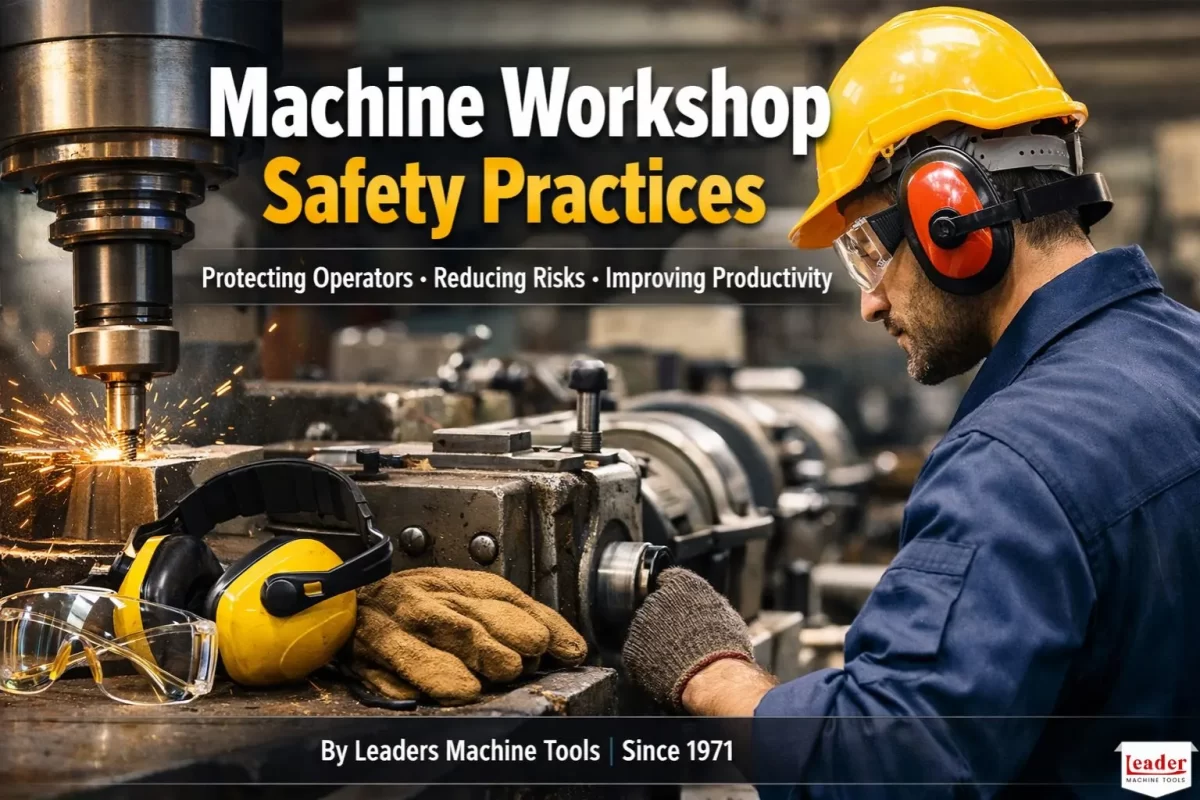
Founded in 1971 by the visionary Sh. Darshan Lal Sehdev, Leaders Machine Tools has grown from a modest beginning into one of India’s most respected machine tool manufacturers. Headquartered in Batala, Punjab—a city known nationwide for engineering excellence—the company represents decades of precision manufacturing, practical innovation, and deep understanding of Indian workshop conditions.
What began as a casting unit for gunmetal components steadily evolved into a full-fledged manufacturing organization delivering lathe machines, milling machines, vertical turning lathes (VTLs), and customized workshop solutions. The contribution of Sh. Darshan Lal Sehdev to Indian industry was recognized with the Udyog Patra Award, presented by Sh. M. Hidayatullah, then Vice President of India, on 20th December 1980 at the FICCI Auditorium, New Delhi.
This long-standing manufacturing experience shapes how Leaders Machine Tools approaches workshop safety. Machines are designed not only for accuracy and productivity, but also for operator protection, mechanical stability, and long service life. This article explains essential safety practices for machine workshops, aligned with ISI standards and OSHA-inspired global best practices, with a practical focus for Indian manufacturing units.
Common Risks in Workshops
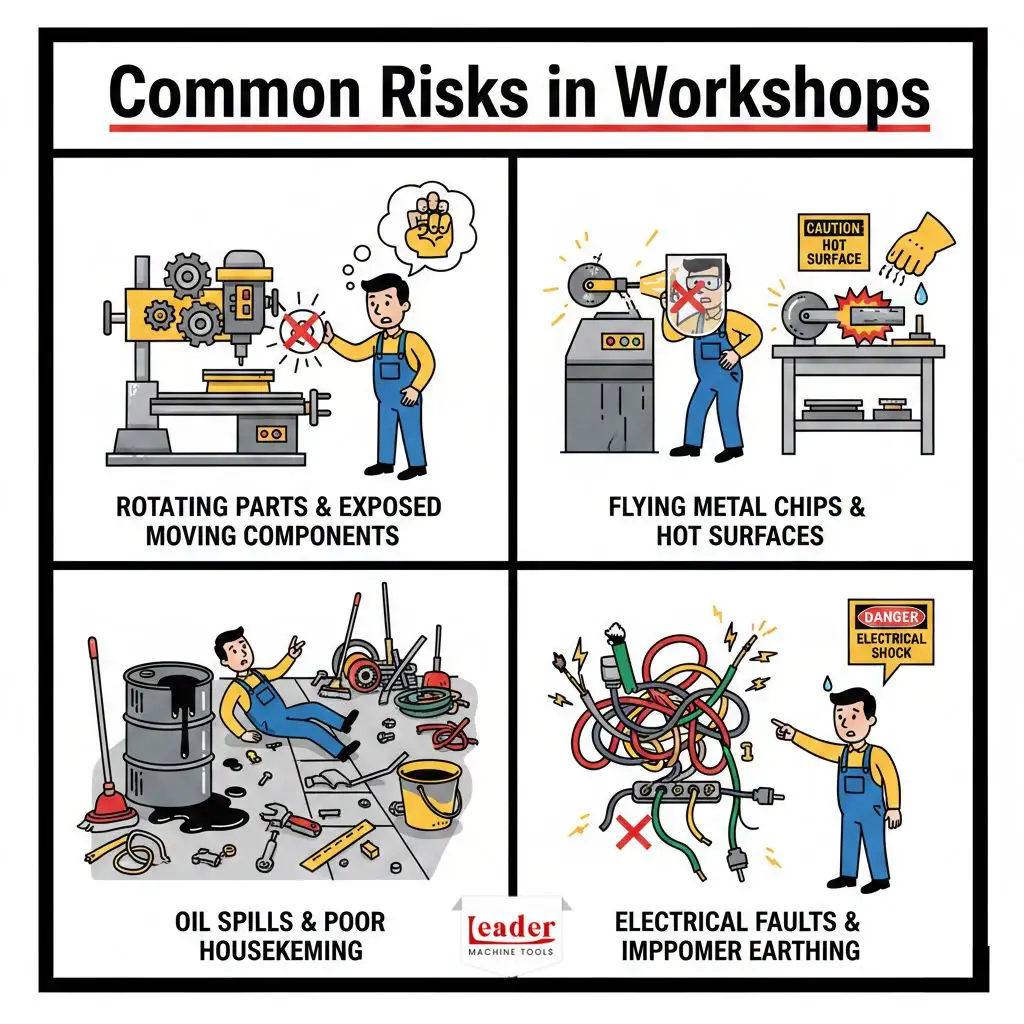
Machine workshops face multiple risks due to the nature of metal cutting and heavy-duty operations. Understanding these risks is the first step toward prevention.
One of the most common risks is entanglement. Loose clothing, gloves, or long hair can get caught in rotating parts such as chucks, spindles, or lead screws. Another major risk is flying chips. Metal chips produced during turning or milling are sharp and hot and can cause eye or skin injuries.
Slips and falls are also frequent, especially when oil, coolant, or metal scrap is left on the shop floor. Electrical risks arise from damaged cables, poor earthing, or overloaded panels. In older workshops, unguarded machines and worn-out controls increase the chances of accidents.
By identifying these risks early, workshop owners can take corrective steps such as improving housekeeping, upgrading machines, and enforcing safety rules.
Operator Safety Guidelines
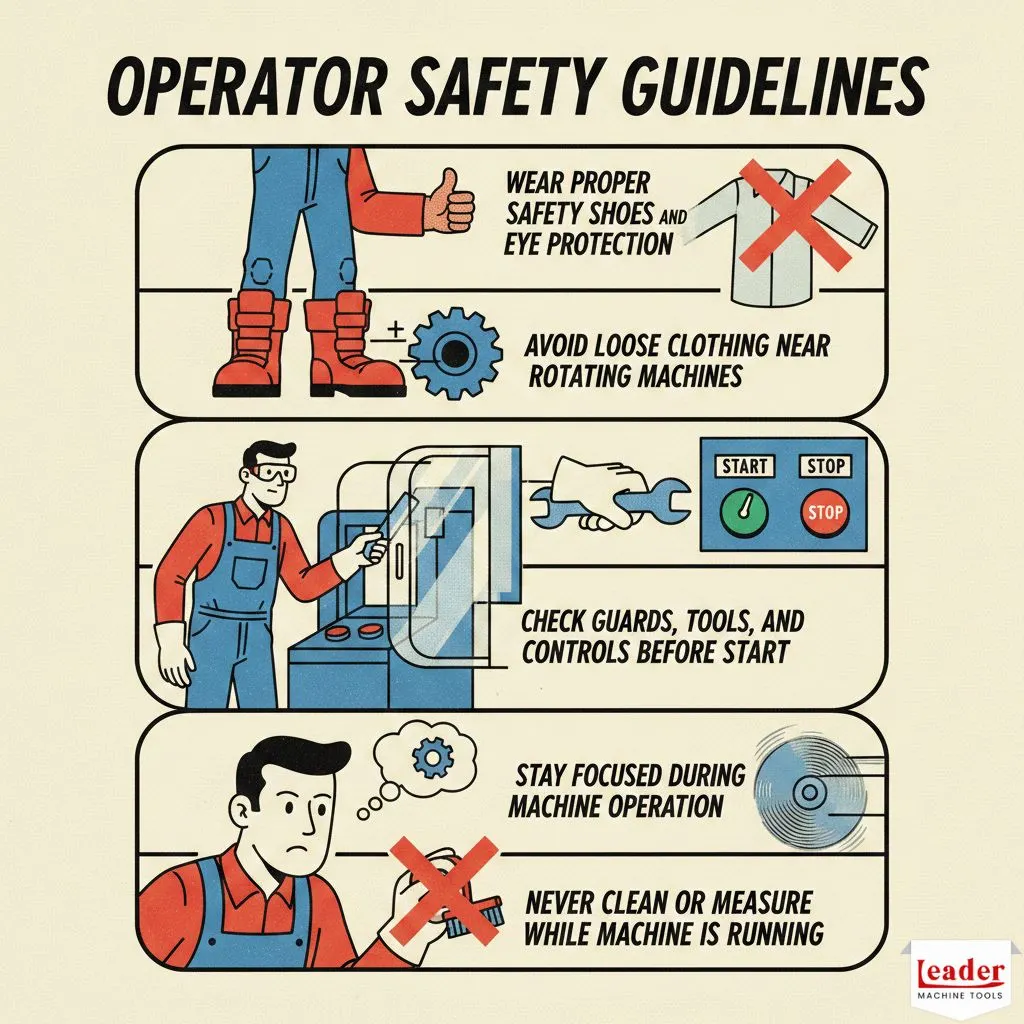
Operators are the backbone of any workshop. Clear and simple safety rules help them work confidently and efficiently.
Before starting any machine, operators should always check guards, emergency stop buttons, lubrication levels, and tool holding. Wearing tight-fitting clothing and avoiding jewellery is essential near rotating machinery. Safety shoes with steel toes should be standard on the shop floor.
During operation, the operator must stay focused. Measuring components or removing chips while the machine is running should be strictly avoided. Tools must be properly clamped, and cutting parameters should match the machine capacity.
At Leaders Machine Tools, machines are designed with operator-friendly layouts, smooth controls, and stable beds to reduce vibration and sudden movement. This helps operators maintain control and reduces fatigue-related errors.
Explore Operator-Safe Machine Tools
Maintenance and Electrical Safety
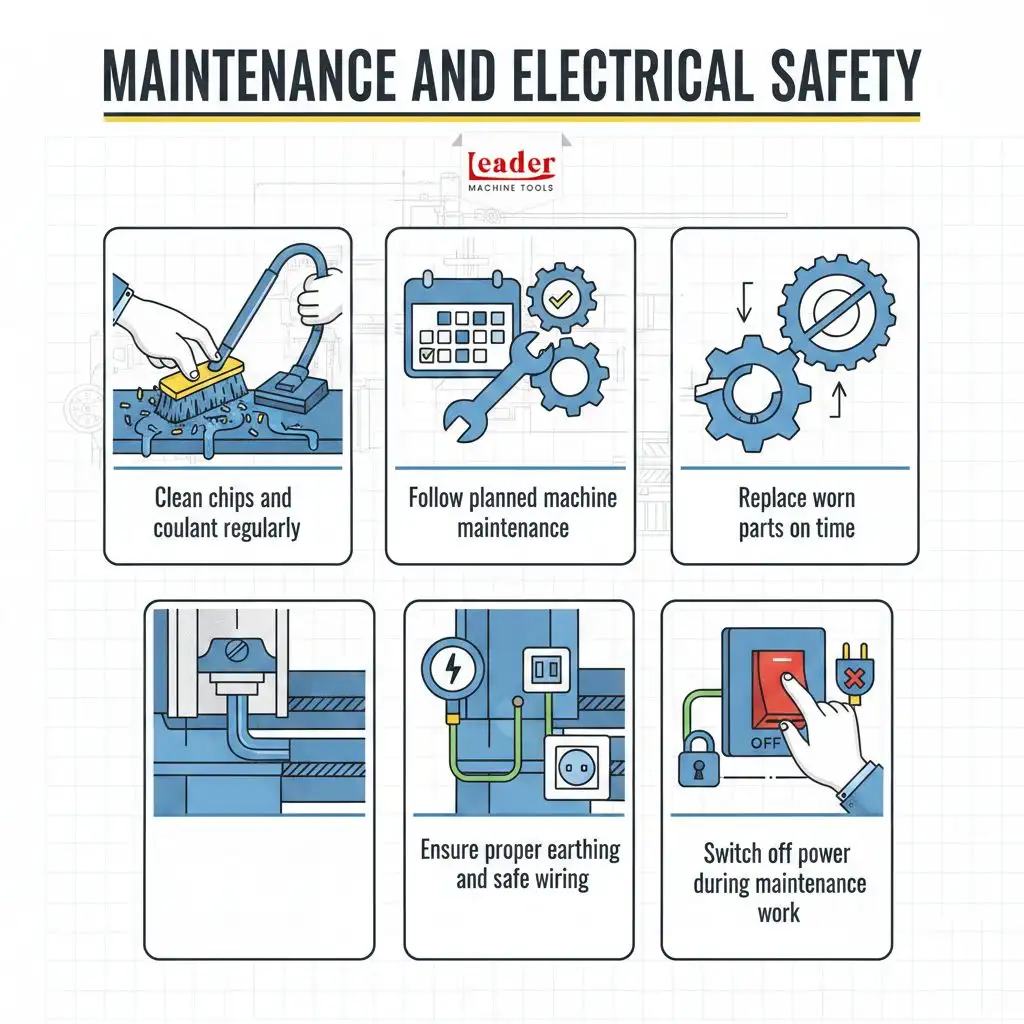
A well-maintained machine is a safer machine. Regular maintenance prevents sudden breakdowns that can lead to accidents.
Daily cleaning of chips, weekly inspection of belts and gears, and scheduled lubrication are basic but critical tasks. Worn-out parts should be replaced immediately, not adjusted temporarily. Maintenance work must always be carried out with the power supply switched off and locked.
Electrical safety is equally important. All machines should have proper earthing and certified electrical components. Control panels must be dust-free and protected from coolant splash. Only trained electricians should handle wiring or motor-related issues.
Leaders Machine Tools follows strict quality checks in electrical fittings and recommends preventive maintenance schedules to customers to ensure long-term safety and performance.
Safety Features to Look For in Modern Machines
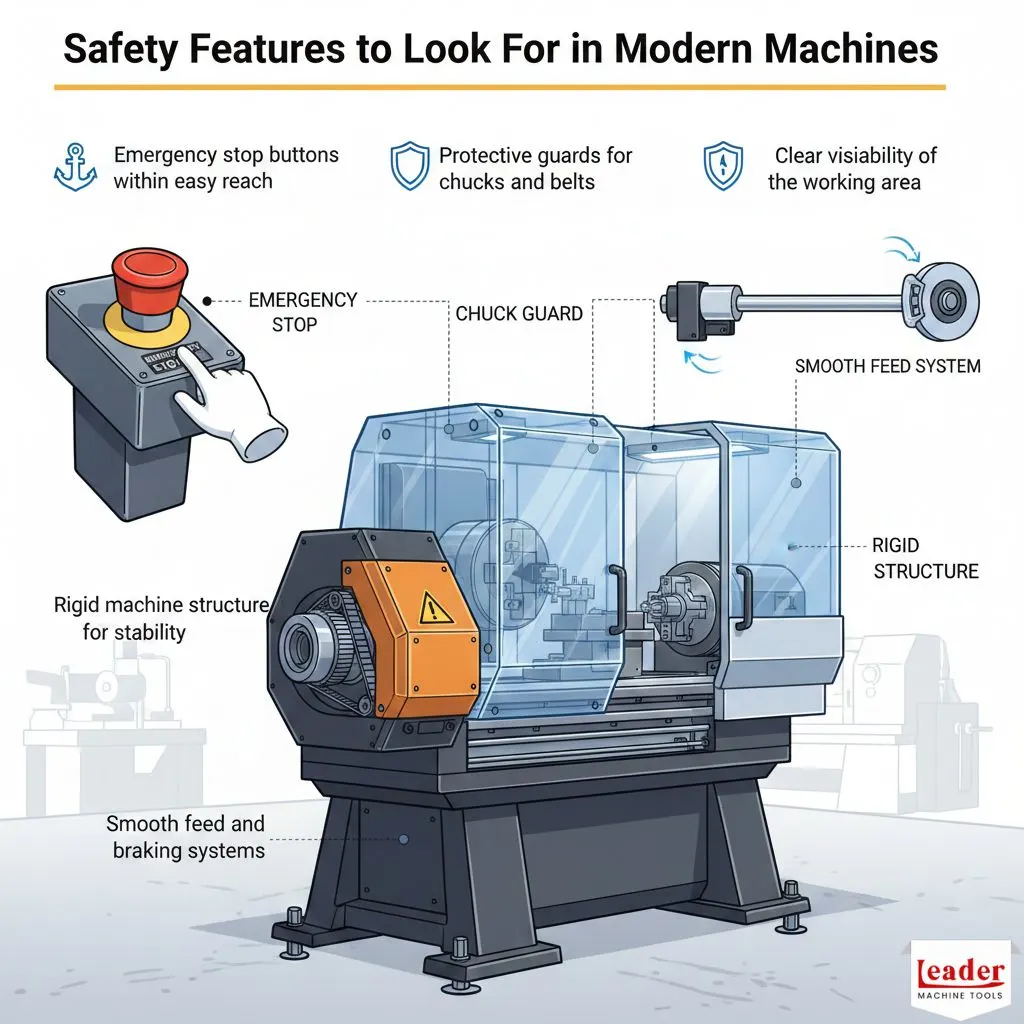
Modern machine tools offer built-in safety features that older models often lack. Investing in such machines improves both safety and productivity.
Key safety features include emergency stop buttons placed within easy reach, protective guards for chucks and belts, and clearly marked controls. Rigid machine construction reduces vibration, which lowers tool breakage and improves surface finish.
Machines with smooth feed mechanisms, reliable braking systems, and overload protection help prevent sudden failures. Clear visibility of the work area and proper lighting also contribute to safer operation.
Leaders Machine Tools integrates safety-focused design into its lathe machines, milling machines, and VTLs, making them suitable for continuous industrial use while keeping operator safety in mind.
Importance of Training and PPE
Even the best machine cannot ensure safety without trained people. Regular training programs help operators understand machine limits, correct operating methods, and emergency procedures.
New operators should never be allowed to work independently without supervision. Refresher training is equally important for experienced workers, especially when new machines or processes are introduced.
Personal Protective Equipment (PPE) is the last but essential layer of protection. Safety goggles, face shields, gloves (for handling material, not rotating parts), ear protection, and helmets should be used as required. PPE must be well-fitted and in good condition.
Workshops that invest in training and PPE not only reduce accidents but also build a disciplined and skilled workforce.
Building a Safer Workshop with the Right Machines
Safety in machine workshops is not a one-time effort. It is a continuous process involving people, processes, and machines. By understanding risks, following operator guidelines, maintaining equipment, and choosing modern machines with built-in safety features, workshops can create a safer and more productive environment.
With over five decades of manufacturing experience, Leaders Machine Tools supports Indian industries with robust, industrial-grade machines designed for safety, accuracy, and long-term reliability.