What Is a Lathe Machine? Types and Applications Explained
leadermachinetools on 17 February, 2026 | No Comments
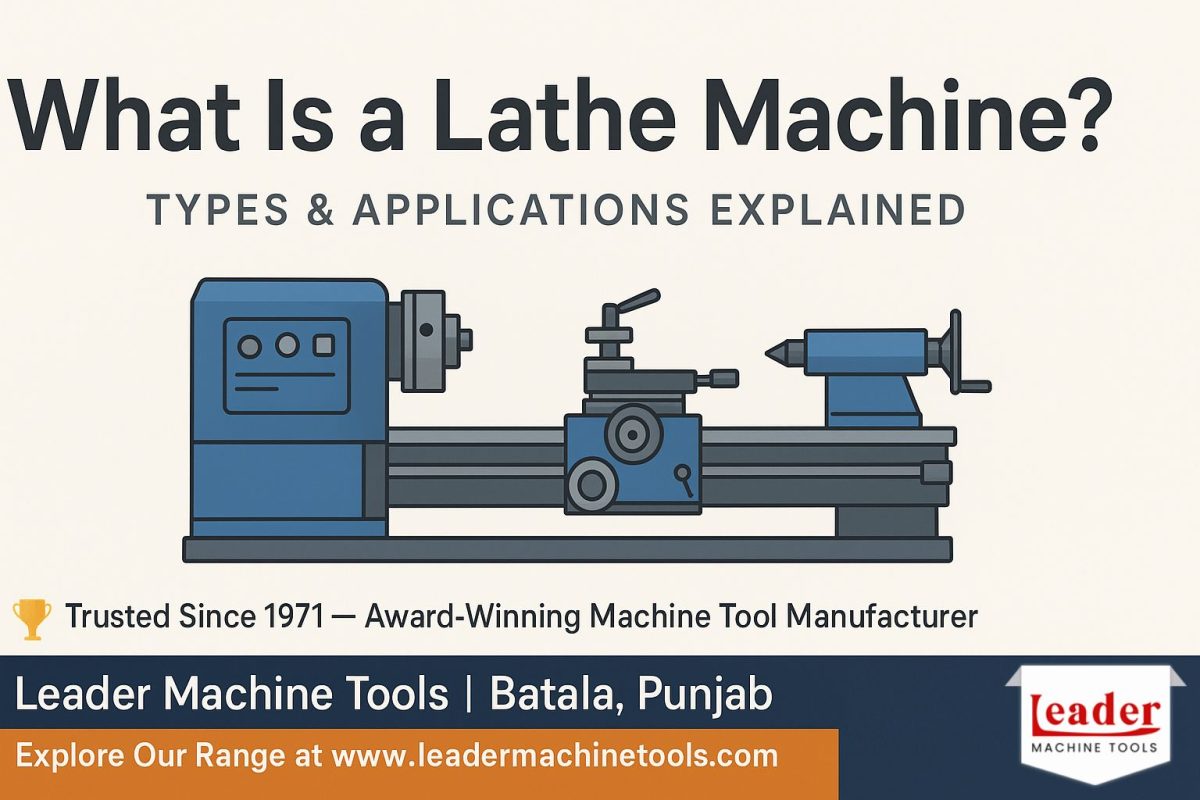
Introduction to Lathe Machines
A lathe machine is one of the most essential tools in the metalworking and manufacturing industries. It is primarily used to shape, cut, and finish materials like metal, wood, or plastic by rotating the workpiece against a cutting tool.
In simple words, a lathe removes unwanted material to create perfectly round, symmetrical, and smooth components used in engineering, automotive, and industrial applications.
At Leader Machine Tools, we believe that a lathe is more than a machine — it is the foundation of precision manufacturing. From basic turning operations to complex CNC machining, the lathe has remained at the heart of every workshop for decades.
Major Parts of a Lathe Machine
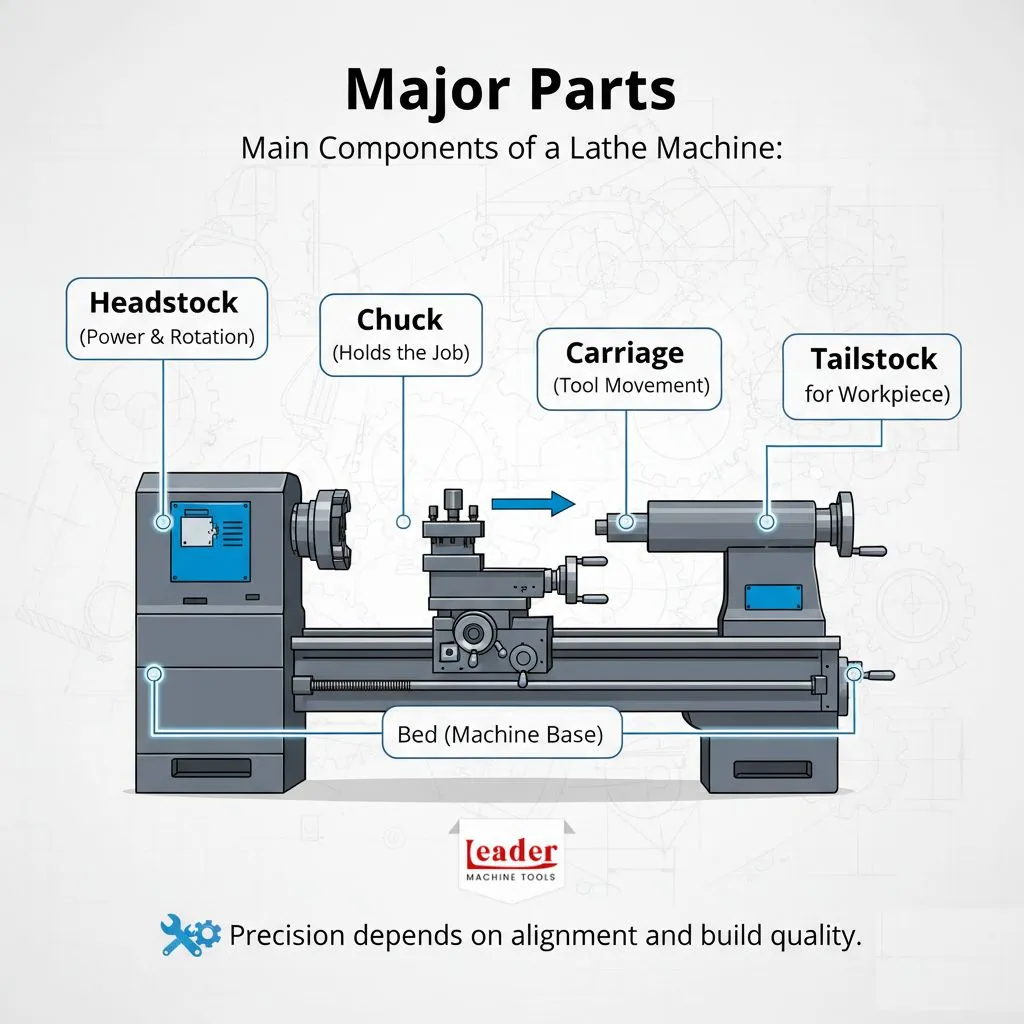
To understand how a lathe works, it’s helpful to know its main parts. Every lathe machine — regardless of size or automation level — has these key components:
- Headstock:
The headstock houses the main spindle, gears, and motor. It provides the power and motion needed to rotate the workpiece. - Bed:
The bed is the solid base of the machine, ensuring rigidity and accurate alignment. It supports other parts and absorbs vibrations during machining. - Carriage:
The carriage moves the cutting tool along the surface of the rotating workpiece. It can travel longitudinally or crosswise for precise shaping. - Tailstock:
Positioned opposite the headstock, the tailstock supports the free end of long workpieces and can hold drilling or reaming tools. - Lead Screw and Feed Rod:
These control the automatic feed of the tool, essential for operations like thread cutting. - Chuck:
The chuck grips and holds the workpiece securely during operation. Different chucks are used depending on job requirements.
Each component plays a critical role in ensuring smooth, accurate, and safe machining operations.
Types of Lathe Machines
Over the years, lathe machines have evolved into several types to suit different manufacturing needs. Below are the most common and widely used types of lathe machines:
1. Center Lathe (Engine Lathe)
The center lathe, also known as an engine lathe, is the most traditional and widely used type. It is ideal for general-purpose turning, facing, drilling, and threading tasks.
Due to its simplicity, it is commonly found in tool rooms, maintenance workshops, and small manufacturing units.
2. Turret Lathe
A turret lathe is designed for mass production. It features a turret head that holds multiple tools, allowing quick changes during operations. This reduces downtime and enhances productivity — ideal for repetitive, high-volume machining tasks.
3. All Geared Lathe Machine
An all geared lathe offers variable spindle speeds and high torque through gear mechanisms. It provides greater accuracy, smooth operation, and is suitable for heavy-duty metal cutting.
At Leader Machine Tools, our all-geared lathes are known for their robust build, superior gearbox design, and long service life.
4. CNC Lathe Machine
CNC (Computer Numerical Control) lathes represent the modern face of machining. These machines operate with computer precision, ensuring consistency, automation, and complex shaping capabilities.
CNC lathes are widely used in industries that demand tight tolerances and repeatable accuracy — such as aerospace, automotive, and defense sectors.
5. Heavy Duty Lathe Machine
As the name suggests, a heavy duty lathe is designed to handle large and tough workpieces. It is commonly used in power plants, shipyards, and railway workshops.
Leader Machine Tools manufactures heavy-duty lathes engineered for stability, long-term reliability, and superior cutting performance — perfect for demanding industrial environments.
Common Applications in Industries
Lathe machines play a key role across multiple industrial sectors. Here are some of the most common uses of lathe machines:
- Railway Workshops:
For turning axles, wheels, and other large components with high precision. - Fabrication Units:
Used for custom machining, threading, and part shaping in steel fabrication projects. - Power Plants and Energy Sector:
Lathes help in producing turbine shafts, couplings, and maintenance parts. - Automotive Industry:
For machining engine parts, crankshafts, and custom components. - Woodworking and Tool Rooms:
Used for shaping wooden handles, spindles, and precision tools.
Whether it’s large-scale production or small repair jobs, the versatility of a lathe makes it a must-have in almost every industrial workshop.
Benefits of Using a Quality Lathe Machine
Investing in a high-quality lathe machine brings multiple benefits:
- Precision and Accuracy: Ensures consistent, high-quality finishes on every component.
- Durability: Heavy-duty construction and quality materials ensure long operational life.
- Efficiency: Reduces manual labor and machining time.
- Versatility: Suitable for multiple operations like facing, threading, drilling, knurling, and taper turning.
- Low Maintenance: Machines built with reliable parts and superior assembly require minimal upkeep.
At Leader Machine Tools, our machines are engineered with decades of manufacturing experience, ensuring you get dependable performance that stands the test of time.
How to Select the Right Lathe for Your Use
Choosing the perfect lathe machine depends on your type of work, material, and production goals. Consider the following factors before investing:
Factors like Workpiece Size, Precision Level, and Automation
- Workpiece Size:
The length and diameter of your workpiece will determine the swing and bed length of the lathe you need. - Precision Level:
For small, high-precision parts, choose CNC or all-geared models. For general turning jobs, a center lathe is sufficient. - Material Type:
If you work with hard metals or large components, a heavy-duty lathe is the right choice. - Production Volume:
For high-volume manufacturing, turret or CNC lathes deliver better productivity. - Automation Requirements:
CNC lathes offer superior automation and are ideal for smart manufacturing environments.
By aligning your machine choice with these factors, you can ensure maximum efficiency and return on investment.
Why Choose Leader Machine Tools
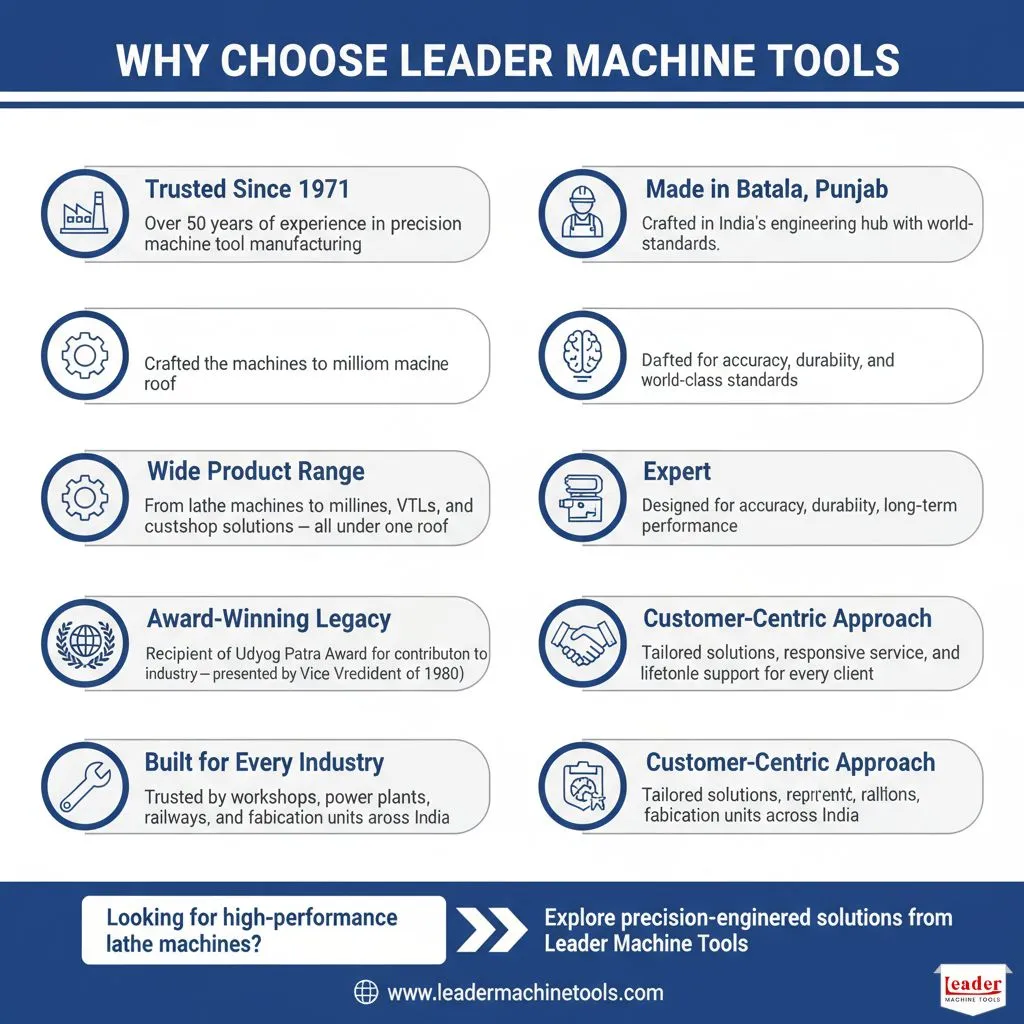
Founded in 1971 by the visionary Sh. Darshan Lal Sehdev, Leader Machine Tools has grown from a modest gunmetal casting unit into one of India’s most respected machine tool manufacturers.
Based in Batala, Punjab, the company has earned a reputation for engineering precision, durable performance, and customer trust.
Our founder, Sh. Darshan Lal Sehdev, was honored with the prestigious Udyog Patra Award by the Institute of Trade and Industrial Development, New Delhi, presented by Sh. M. Hidayatullah, then Vice President of India, in 1980 — a proud testament to our contribution to Indian industry.
With decades of expertise in lathe machines, milling machines, vertical turning lathes (VTLs), and custom workshop solutions, Leader Machine Tools continues to power workshops across India with reliable, high-performance machinery.
Conclusion
A lathe machine is the backbone of every machining and fabrication setup. From shaping and threading to finishing complex parts, it ensures precision, productivity, and reliability in every turn.
At Leader Machine Tools, we combine decades of craftsmanship with modern technology to deliver machines that meet the highest standards of performance and durability.
CTA:
Looking for reliable lathe machines for your workshop?
Explore Leader Machine Tools’ range of lathes and find the perfect model for your machining needs.