Understanding the Difference Between Hacksaw and Bandsaw Machines
leadermachinetools on 16 February, 2026 | No Comments
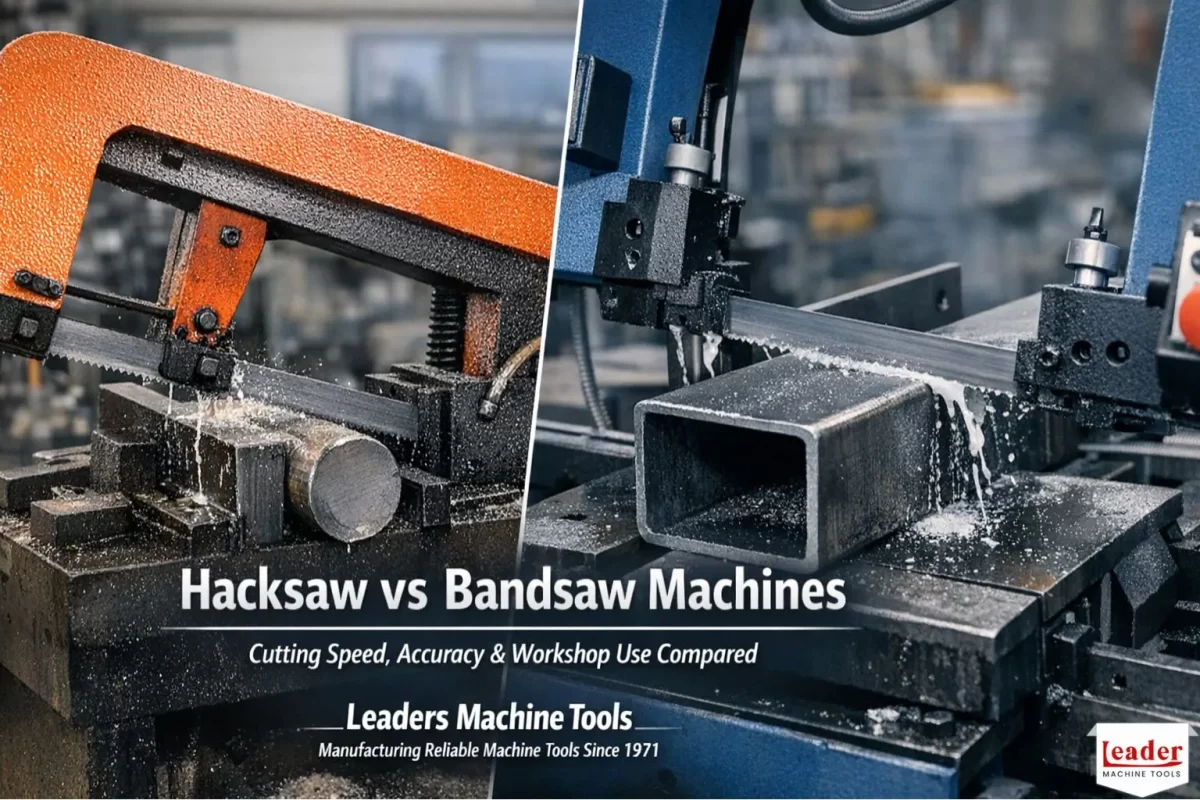
Choosing the right metal cutting machine is an important decision for any workshop or fabrication unit. Two commonly used machines for cutting metal sections are hacksaw machines and bandsaw machines. While both serve the same basic purpose, their working style, cutting speed, accuracy, and long-term value are very different.
At Leaders Machine Tools, founded in 1971 by the visionary Sh. Darshan Lal Sehdev in Batala, Punjab, we have worked closely with workshops and industries across India for decades. Based on this experience, this guide explains the real, practical differences between hacksaw and bandsaw machines, helping you choose the right solution for your workshop.
Basic Working Principles
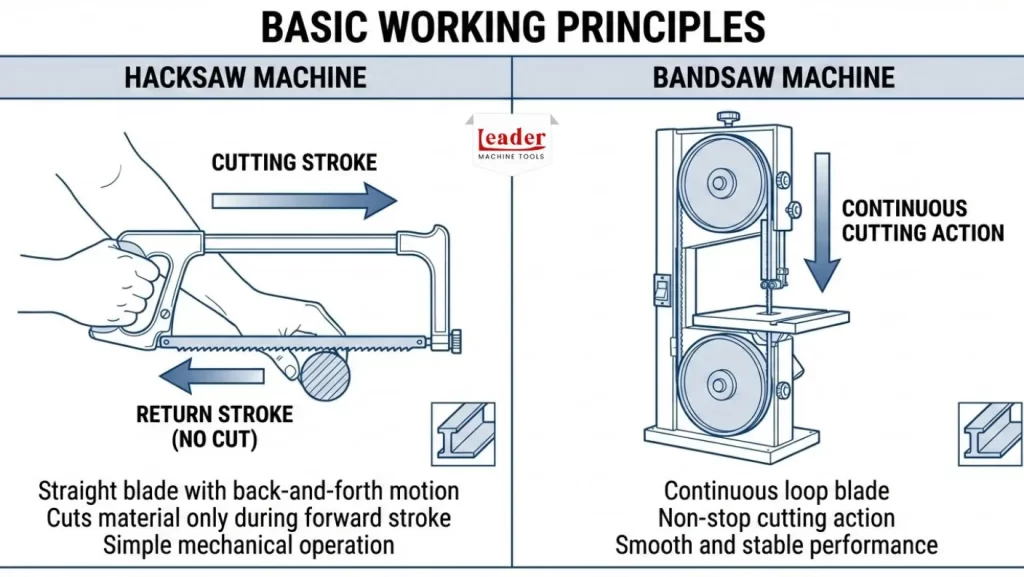
Hacksaw Machine – Traditional and Straightforward
A hacksaw machine uses a straight blade that moves back and forth in a reciprocating motion. During the forward stroke, the blade cuts the material, while the return stroke is idle.
This type of machine is widely used in:
- Small workshops
- Maintenance departments
- Basic fabrication jobs
Power hacksaw machines are especially popular where:
- Cutting volumes are limited
- Accuracy requirements are moderate
- Investment budget is controlled
Hacksaw machines have a simple mechanical design, which makes them easy to operate and repair.
Bandsaw Machine – Continuous and Efficient
A bandsaw machine works with a continuous loop blade running over two or more wheels. The blade moves in one direction, providing uninterrupted cutting action.
Bandsaw machines are commonly used in:
- Production workshops
- Fabrication units
- Engineering and manufacturing plants
Because of continuous cutting, bandsaws offer:
- Faster operation
- Smoother cuts
- Better control over material wastage
This working principle makes bandsaw machines ideal for modern workshops focused on productivity.
Cutting Speed and Accuracy Comparison
Hacksaw Machine Performance
Hacksaw machines generally operate at a slower cutting speed. Since the blade cuts only during the forward stroke, overall efficiency is limited.
Accuracy level:
- Suitable for general-purpose cutting
- Acceptable for mild steel sections and bars
- Not ideal for precision-critical jobs
Hacksaw machines perform well when:
- Speed is not the main concern
- Occasional cutting is required
Bandsaw Machine Performance
Bandsaw machines offer significantly higher cutting speed because the blade is always engaged with the material.
Accuracy level:
- Cleaner and straighter cuts
- Better dimensional control
- Consistent results even on repeated jobs
For industries where:
- Time saving matters
- Repeat accuracy is required
- Material wastage must be reduced
bandsaw machines clearly have an advantage.
Blade Type & Maintenance
Hacksaw Blade and Maintenance
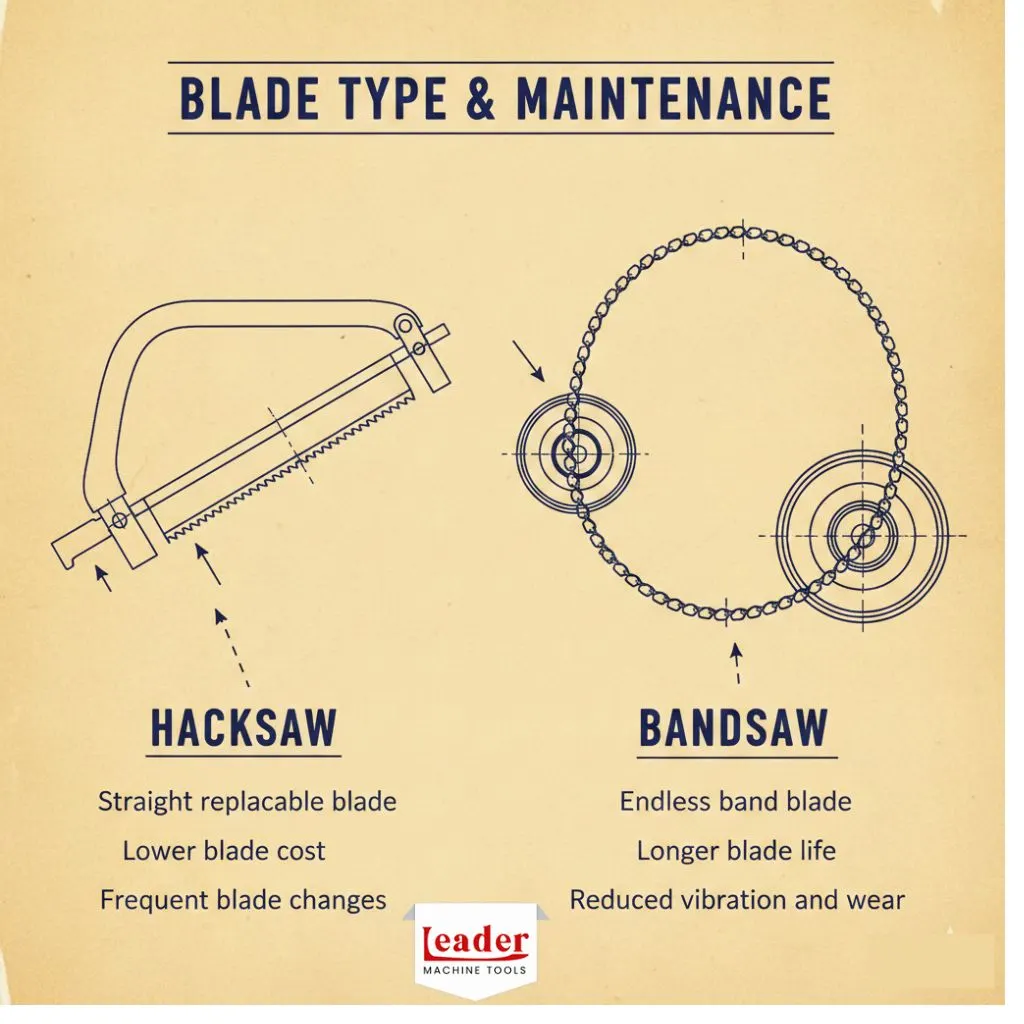
Hacksaw machines use straight blades, which are:
- Easy to replace
- Low in cost
- Readily available
Maintenance aspects:
- Blade breakage is more frequent
- Manual tension adjustment is required
- Higher vibration affects blade life
However, the simplicity of hacksaw blades makes them suitable for workshops with limited technical support.
Bandsaw Blade and Maintenance
Bandsaw machines use endless loop blades, designed for durability and precision.
Maintenance advantages:
- Longer blade life
- Less vibration during cutting
- Better finish with fewer blade changes
Although bandsaw blades are costlier than hacksaw blades, their longer life and better performance often reduce overall operating cost.
Which Machine Is Best for Your Workshop
The right choice depends on your workload, accuracy needs, and future growth plans.
Choose a Hacksaw Machine if:
- You run a small or medium workshop
- Cutting volume is low to moderate
- Budget is limited
- Jobs are non-repetitive
Hacksaw machines remain a practical option for many Indian workshops handling basic fabrication work.
Choose a Bandsaw Machine if:
- You have continuous cutting requirements
- Accuracy and surface finish are important
- You work with larger sections or harder materials
- You want higher productivity and long-term efficiency
For growing workshops and industrial units, bandsaw machines offer better value over time.
Cost and Durability Overview
Hacksaw Machine – Lower Initial Cost
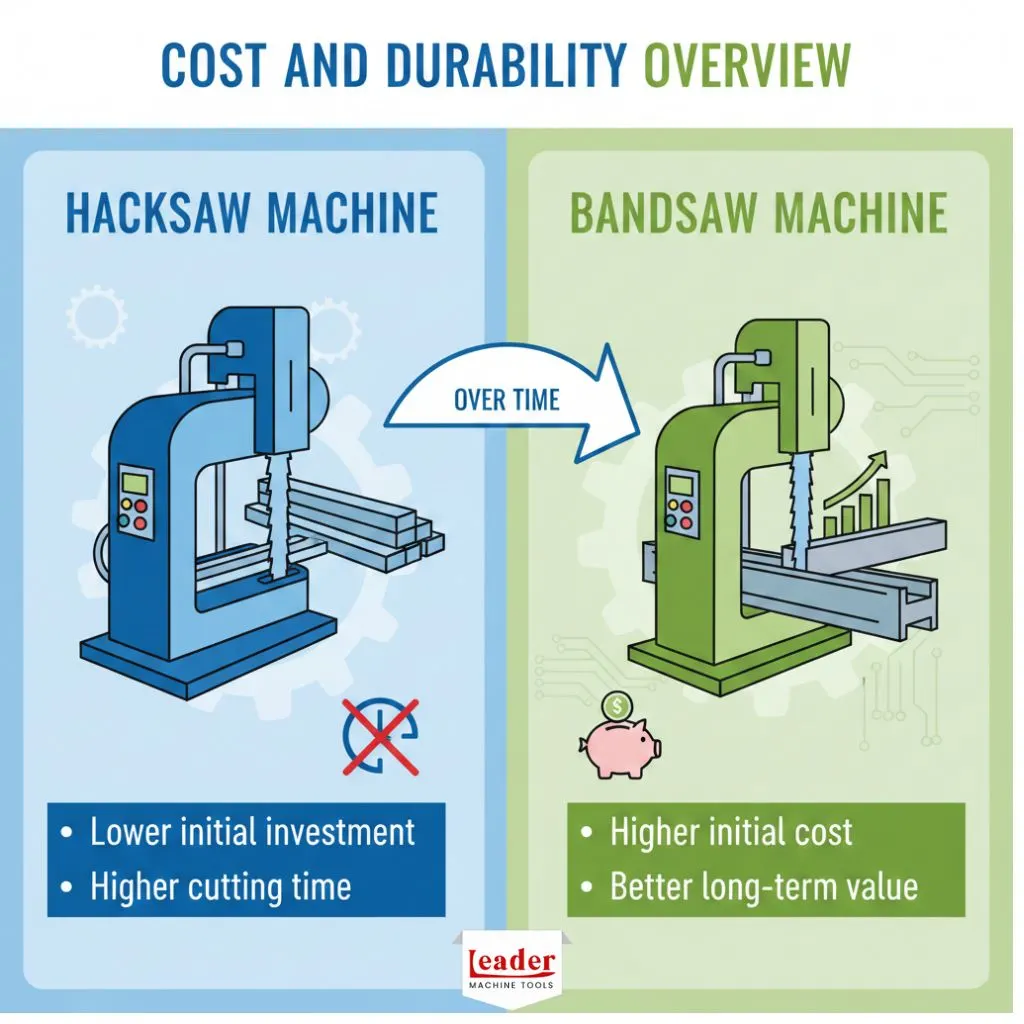
- Lower purchase price
- Simple mechanical structure
- Easy to repair locally
However:
- Higher cutting time
- Frequent blade replacement
- Lower productivity
Bandsaw Machine – Higher Value in the Long Run
- Higher initial investment
- Stronger build and smoother operation
- Reduced material wastage
Over years of use, bandsaw machines often prove more economical due to faster output and lower downtime.
Experience That Guides the Right Choice
From its early days as a gunmetal casting unit to becoming one of India’s respected machine tool manufacturers, Leaders Machine Tools has continuously evolved with industry needs. The company’s founder, Sh. Darshan Lal Sehdev, was honored with the Udyog Patra Award by the Institute of Trade and Industrial Development, New Delhi, presented by Sh. M. Hidayatullah, then Vice President of India, at FICCI Auditorium on 20th December 1980.
This legacy reflects our long-standing commitment to quality engineering, honest guidance, and reliable machines for Indian industries.
Final Thoughts
Both hacksaw and bandsaw machines have their place in metal cutting operations. The key is understanding where each machine fits best. A well-informed decision not only improves productivity but also supports long-term workshop growth.
CTA: Explore Metal Cutting Machines
Looking to upgrade or choose the right cutting solution for your workshop?
Explore Metal Cutting Machines from Leaders Machine Tools and get expert guidance backed by decades of manufacturing experience.